Storm Season Checklist for Roof Repair in Dallas Homes
North Texas storms can be rough on a roof. Hail, high winds, and heavy rain tend to roll through in late spring and early summer, and your home takes a direct hit up top. June is a smart time to look things over so the rest of the season is less stressful.
We put this checklist together to help you spot problems early and protect your home. With a few simple habits and a good professional partner, you can often prevent emergency roof repair in Dallas, TX, avoid interior damage, and help your roof last longer.
Protect Your Dallas Roof Before Storms Hit
In our area, storms do not spread out evenly through the year. Late spring and early summer often bring fast-building systems with strong wind, driving rain, and hail. One bad storm can cause damage you do not see right away, then the next one finishes the job.
Getting ready before the weather ramps up gives you options instead of surprises. A simple storm season routine can help you:
- Catch small roof issues before they turn into leaks
- Cut down on sudden repairs after a big storm
- Keep water away from walls, ceilings, and your foundation
- Stretch the life of your roof and other exterior surfaces
We work on homes and commercial buildings across the Dallas, Fort Worth area, so we see the same patterns each year. Roofs that get a little attention before storm season usually hold up better when the skies turn dark.
Inspect Your Roof Safely From the Ground
You do not need to climb on the roof to spot many common issues. In fact, we strongly suggest you stay off the roof and keep things safe.
From your yard, driveway, or sidewalk, take a slow walk around and look for:
- Missing shingles or bare spots
- Shingles that look curled, cracked, or uneven
- Sagging areas or dips in the roofline
- Rusted or loose metal around chimneys, vents, and skylights
- Piles of leaves, branches, or other debris that trap moisture
After spring storms, pay extra attention to warning signs that hint at hidden problems:
- Dark patches that look damp long after rain has passed
- Shiny nail heads peeking through the shingle surface
- Gutters that look loose or are hanging away from the house
- Grit or shingle granules collecting near downspouts or on patios
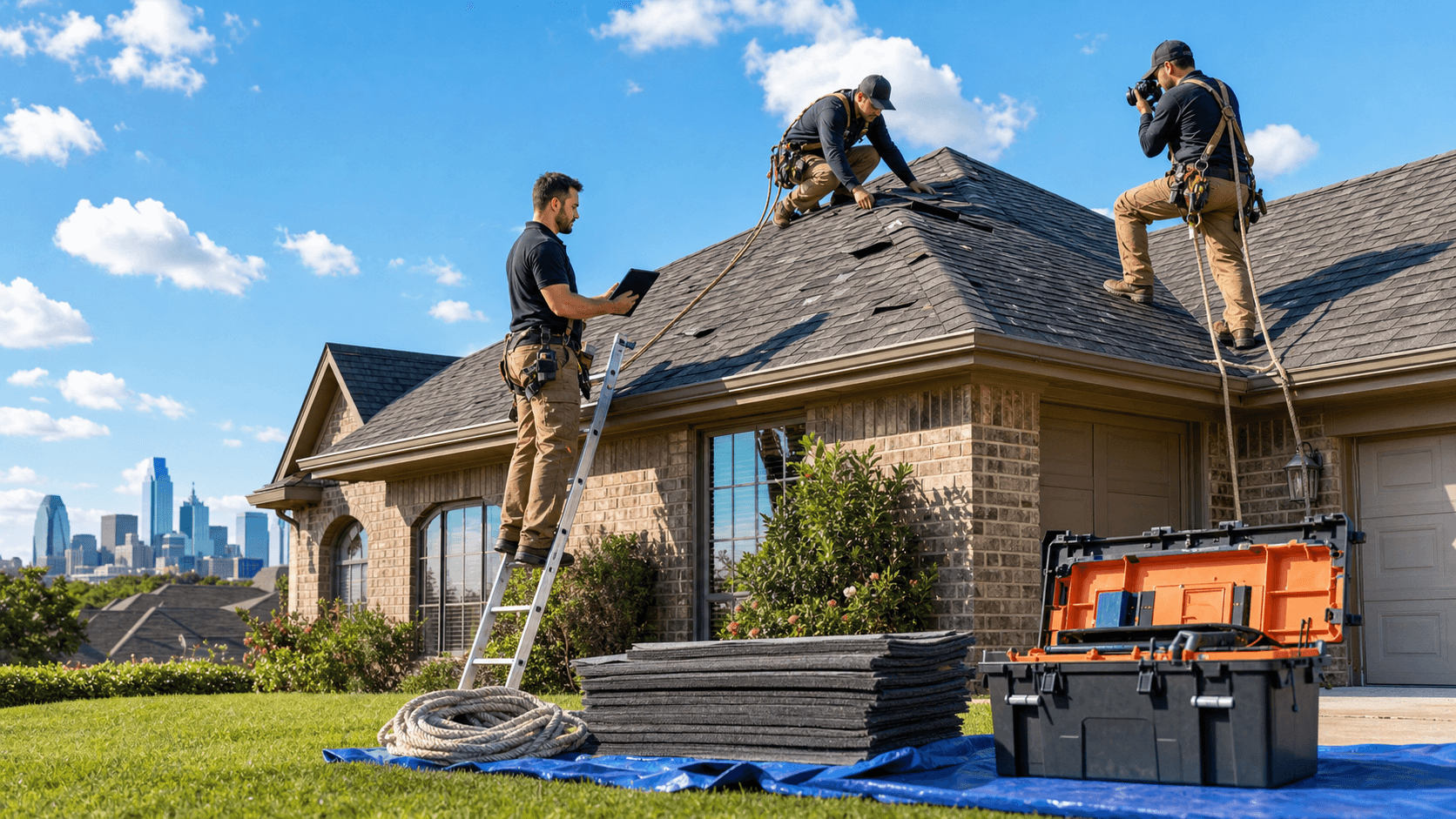
If you see anything that looks off, this is a good time to bring in a licensed roofing contractor. Steep slopes, tall homes, and tricky roof designs are not a safe place for ladders and DIY work. A trained crew can spot damage you might miss and check areas that are hard to reach.
Check Gutters, Downspouts, and Drainage Paths
Your roof and your gutters work as a team. If water cannot move off the roof quickly, it can slip under shingles, soak into the wood at the edges, or collect near the foundation.
During storm season, clear gutters and strong drainage are especially important. When you can do so safely from the ground or a short, stable step ladder, you can:
- Remove leaves, twigs, and small branches from gutters
- Make sure downspouts are not clogged and water flows freely
- Confirm that downspouts send water away from the house, not toward it
- Look for loose sections, sagging runs, or leaks at joints and corners
Sometimes the problem is bigger than a quick cleanout. It is time to call a pro if you notice:
- Gutters still overflowing in heavy rain even after cleaning
- Sections that have pulled away from the roofline
- Water stains or streaks on siding or brick under the gutters
- Soil washing out or puddles forming right by the foundation
A well-working drainage system supports your roof, walls, and yard. It is an easy part of a storm checklist that pays off for years.
Spot Hail and Wind Damage Before Leaks Start
Hail and wind can hurt a roof even if you do not see water inside yet. The key is to look right after a storm, while marks and dents are still fresh.
On asphalt shingles and metal parts, common hail damage signs include:
- Soft or bruised spots that feel different from the rest of the shingle
- Missing granules that leave dark or black areas exposed
- Dents in vents, flashing, and metal roof accessories
- Cracked, broken, or loose shingles in random patterns
Wind can be just as rough. Watch for:
- Shingles that are lifted or flapping in the breeze
- Creased tabs that look like they have been folded back
- Exposed underlayment or bare wood in any area
- Ridge caps that look shifted or out of line
- Impact marks and damage near chimneys, skylights, and roof edges
Catching wind and hail problems early allows for timely roof repair in Dallas, TX, before water makes its way inside. Quick action can also give you better photos and notes for your insurance company, since the damage is fresh and clearly tied to a specific storm.
Plan for Emergency Roof Repairs and Insurance Claims
Storms do not check your schedule. A little planning now can make a big difference when the weather turns fast.
Many homeowners like to keep a simple "after the storm" kit in an easy spot. It might include:
- A flashlight with fresh batteries
- A phone or camera for photos and video
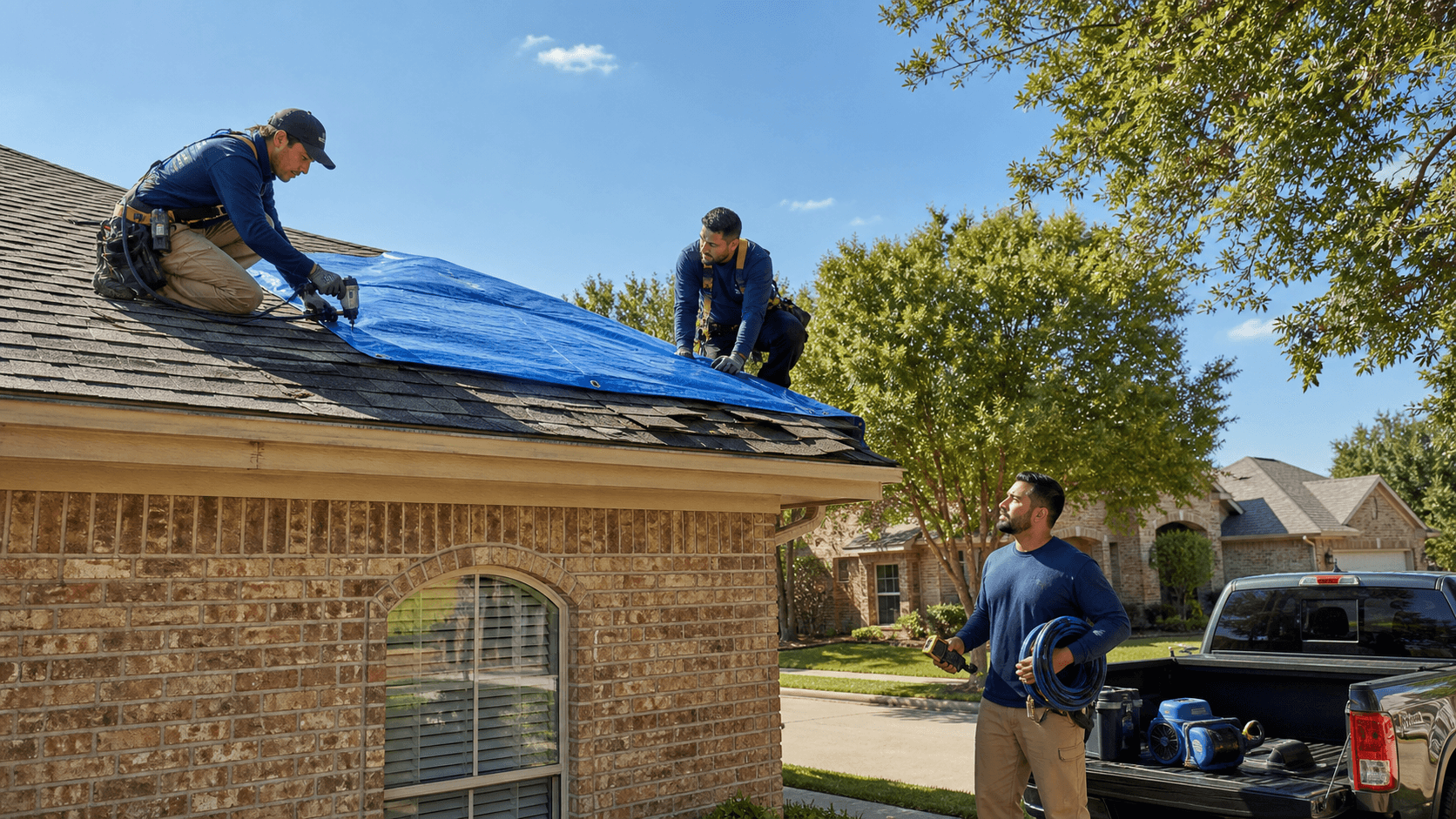
- A few tarps and plastic sheeting for temporary covers
- Basic tools that a roofing crew may need access to, like a hammer or utility knife
- A printed list of emergency contacts, including your trusted roofing contractor
After a severe storm has passed and it is safe to go outside, your first steps can be:
- Take photos of any visible roof, gutter, or siding damage from the ground
- Note the date, time, and general length of the storm in a notebook or on your phone
- Check inside for new water spots on ceilings or walls
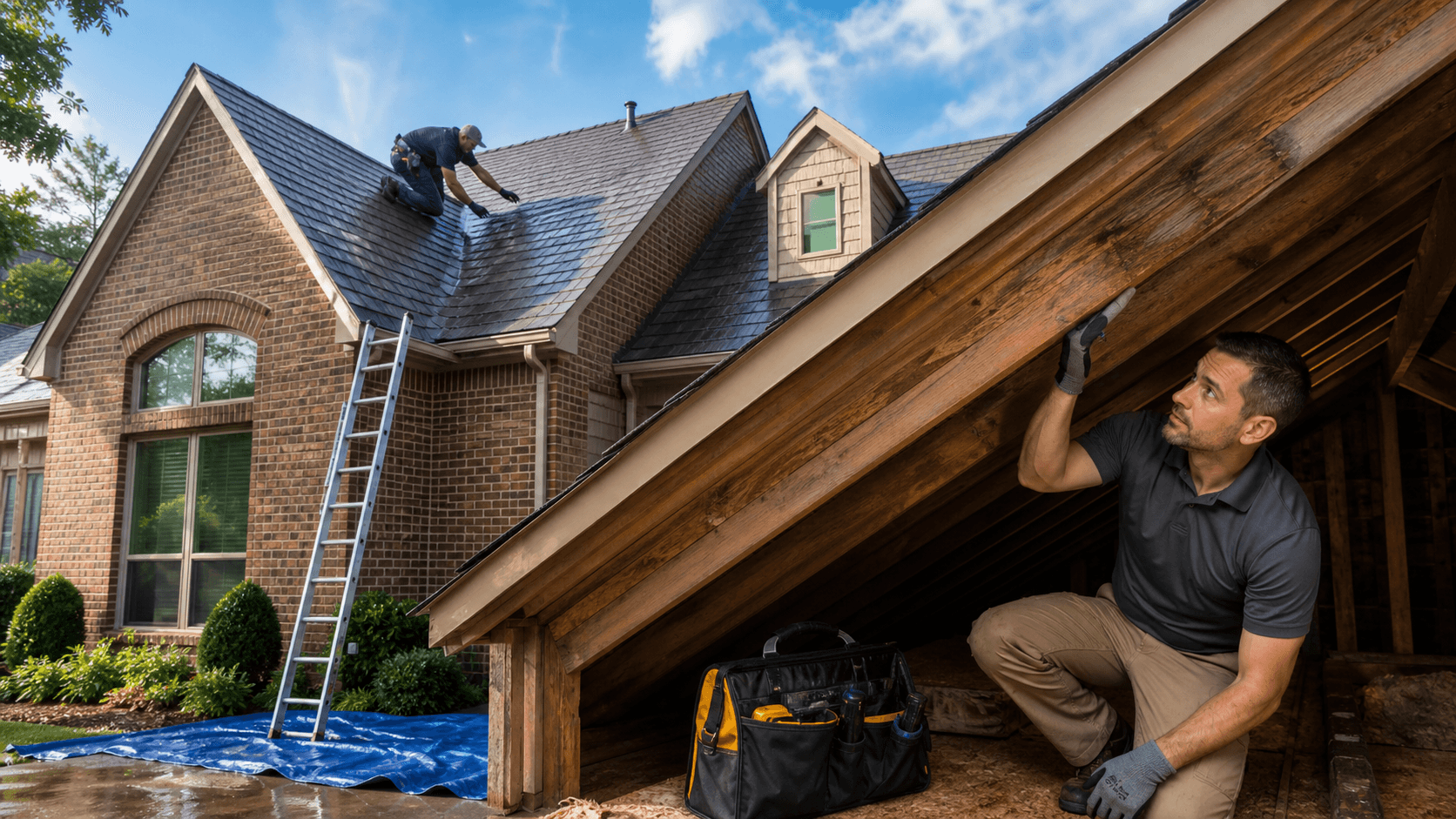
- Look in the attic with a flashlight for damp wood or wet insulation
For insurance, it is usually best to:
- Contact your insurer as soon as you can to start a claim
- Arrange a professional roof inspection to get a detailed damage report
- Use that report and photos to support your claim and answer questions
- Be cautious of door-to-door storm chasers who pressure you to sign on the spot
Taking these steps keeps you in control and helps make the repair process smoother and less stressful.
Schedule a Professional Summer Roof Checkup Now
June is a great time to get ahead of late summer storms. The days are long, the weather is often clear between systems, and there is still time to handle repairs before the next round of hail and wind.
A good professional roof checkup looks at the whole exterior system, not just a few shingles. During a visit, a contractor may:
- Inspect shingles or other roof coverings for wear and storm damage
- Check flashing, vents, and seals around chimneys and skylights
- Review gutters and downspouts for proper flow and tight connections
- Look at attic ventilation and any signs of trapped heat or moisture
- Point out weak spots that could turn into leaks later
At Apex Point Services, we focus on residential and commercial roofing, remodeling, and exterior improvements across the Dallas, Fort Worth area. We know how local storms tend to move, and we understand what they do to different roof styles and materials. A planned summer inspection and maintenance routine can help protect your home now and keep it ready for the seasons ahead.
Get Started With Your Project Today
If you are seeing leaks, missing shingles, or storm damage, now is the time to schedule professional roof repair in Dallas, TX. At Apex Point Services, we carefully inspect your roof, explain your options clearly, and recommend only the repairs you actually need. Our team is ready to respond quickly so you can protect your home and avoid more costly damage later. Reach out today to tell us about your roofing concerns and get your project on the schedule.