Stay Ahead of Late-Summer Roof Leaks in Dallas
Late summer in Dallas can be tough on your roof. You get lingering heat, quick pop-up storms, and the leftovers from tropical systems that bring sudden, heavy rain. All of that can find the weak spots up top and turn them into leaks fast.
A small ceiling stain may not look like a big deal, but it often points to bigger problems. That drip can soak insulation, warp drywall, invite mold, and even hide damage to wood framing. In many homes, the real trouble is behind the paint, not in front of it.
We want to walk through how Dallas homeowners and property managers can spot warning signs early, understand what our weather does to your roof, and handle basic temporary steps like tarping and drying out while you wait for professional storm damage repair in Dallas, TX.
How Late-Summer Weather Triggers Roof Leaks
By late summer, roofs around Dallas have taken months of direct sun and heat. Then, as the season turns toward fall, afternoon storms often roll in quickly. Some days stay clear until late, then a storm drops inches of rain in a short time.
Here is what that mix does to your roof:
- High heat dries out shingles and sealants
- UV rays crack plastics and rubber parts
- Sudden heavy rain pushes water into tiny gaps
- Wind-driven rain blows water under edges and flashing
Heat and UV exposure slowly break down shingles, flashing, and sealants. As they age, they lose flexibility and start to curl, crack, or pull away from the roof surface. When those late-summer storms hit with hard rain and gusty wind, water can get into places that stayed dry earlier in the year.
Common leak sources after storms include:
- Lifted, loose, or missing shingles
- Hail-damaged shingles, vents, and caps
- Cracked or dry-rotted pipe boots around plumbing vents
- Clogged or damaged gutters that let water back up under the roof edge
- Failing flashing at chimneys, skylights, walls, and roof transitions
Once water gets under the surface, it can travel along wood, nails, and framing before finally showing up as a stain inside.
Spotting Roof Leak Warning Signs Indoors and Out
Catching a leak early can save you from a lot of mess later. Start by paying attention to what you see and smell inside your home or building.
Indoor warning signs include:
- New or growing ceiling stains, even small ones
- Bubbling, peeling, or blistered paint on ceilings and walls
- Musty or damp odors in certain rooms or closets
- Warped trim, baseboards, or door frames that no longer close right
- Sagging drywall that may mean heavy, trapped water
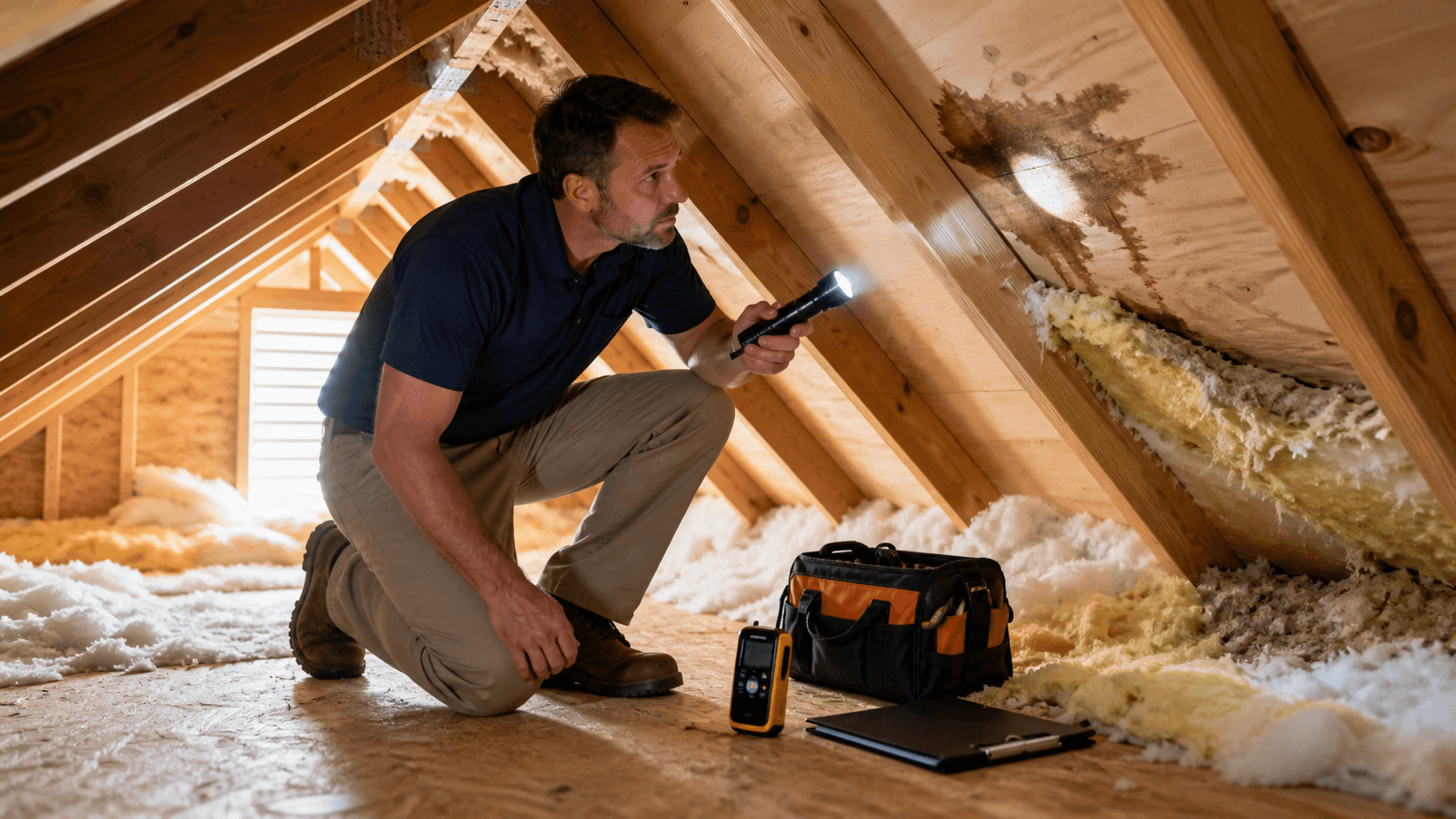
If it is safe, a quick check in the attic can tell you more. You might notice:
- Dark or damp spots on the underside of the roof decking
- Wet or matted insulation
- Rusted nails or metal hangers with water marks
- Light shining through small gaps in the roof
- Water trails or stains near vents, chimneys, or skylights
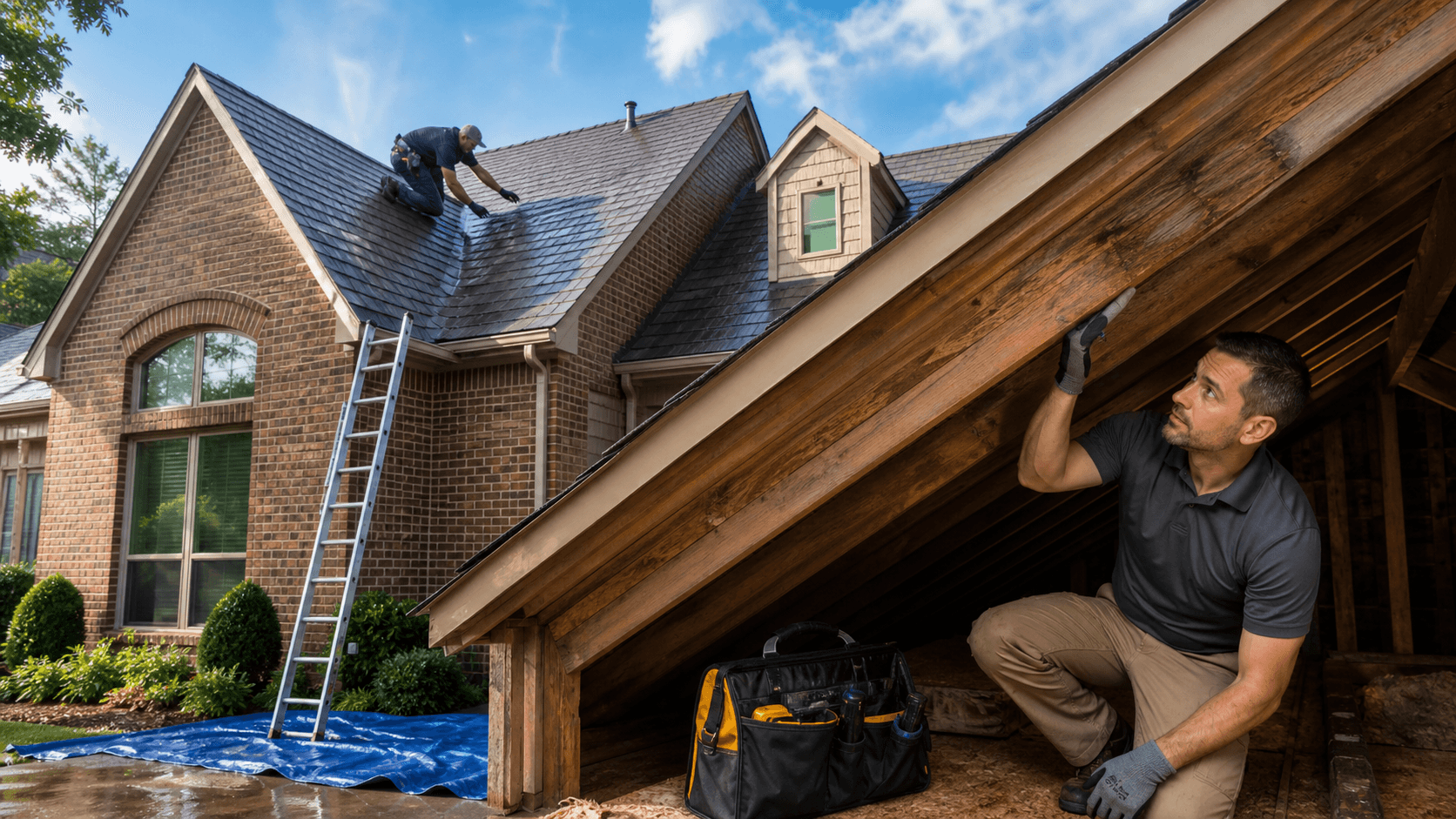
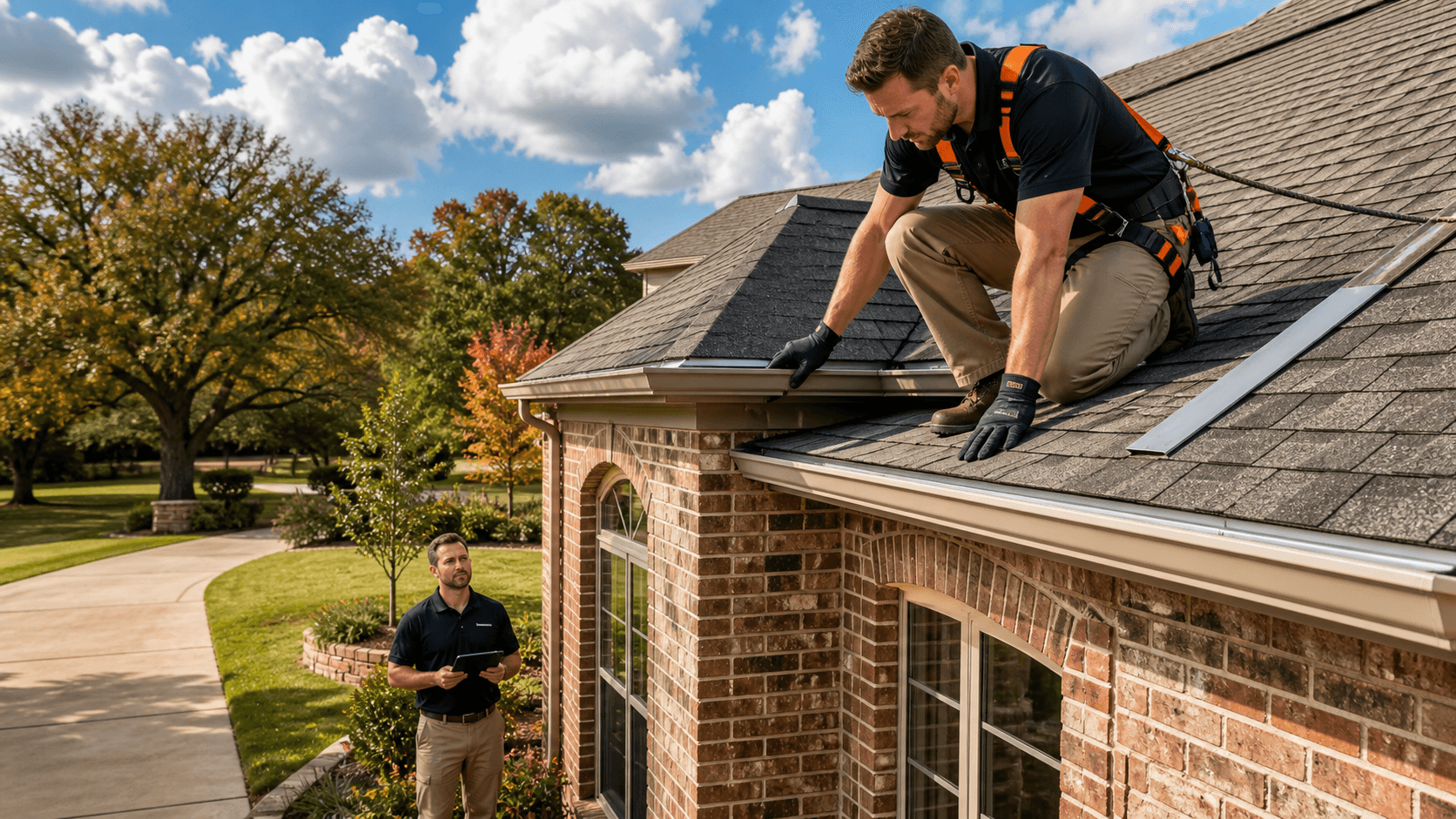
Outside, use binoculars from the ground whenever you can. Walking on a roof, especially when it is wet or steep, is risky. From a safe spot, look for:
- Shingles that are missing, out of line, or curling
- Dark patches that do not match the rest of the roof
- Loose or bent metal around chimneys and roof edges
- Gutters that are sagging or full of debris
If you see anything that worries you, it is safer to have a roofing professional handle a full inspection instead of climbing up yourself.
Safe Temporary Tarping Before Storm Repairs
Sometimes a leak shows up right before another round of storms. A temporary tarp can help limit extra water, but safety has to come first.
Keep these safety basics in mind:
- Never use a ladder during a storm, in strong wind, or at night
- Always have another adult with you holding the ladder
- Wear non-slip shoes and stay off steep or slick areas
- Avoid walking near edges or over soft or sagging spots
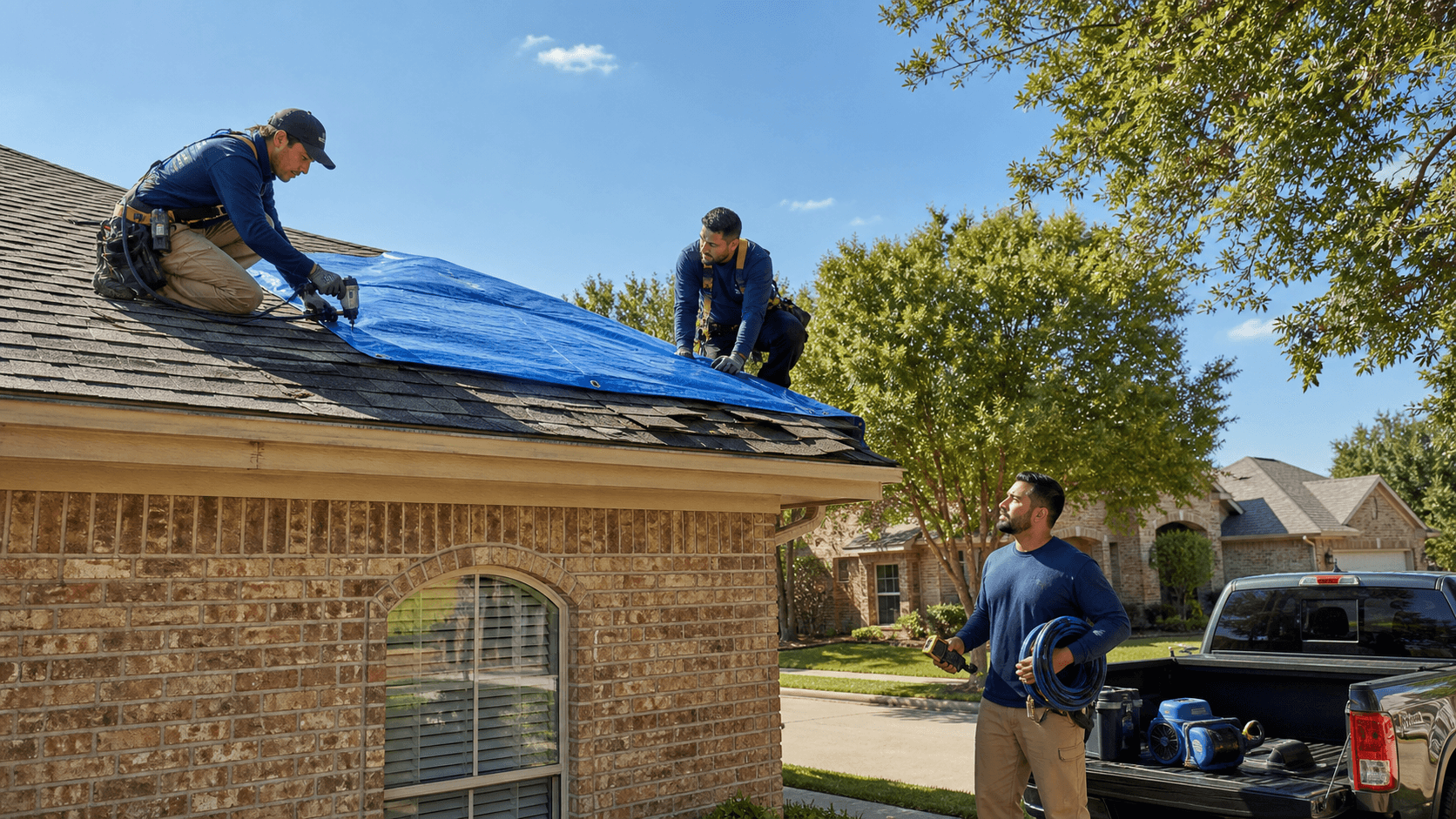
A simple tarping approach, when conditions and roof pitch allow, looks like this:
- Identify the general area of the leak inside
- On the roof, place the tarp so it reaches well above that area
- If possible, extend the tarp over the ridge so water sheds away
- Use wood strips and screws to secure the tarp edges, not loose bricks or rocks that can slide
There are times when DIY tarping is not a good idea at all. For example:
- Multi-story homes where a fall would be severe
- Very steep roofs or complex rooflines
- Any signs of structural damage, such as sagging sections or broken framing
In those cases, waiting for a licensed contractor who handles storm damage repair in Dallas, TX, is the safer choice, even if it means a few extra towels and buckets for a short time.
Drying Out Your Home Without Causing More Damage
Once water gets inside, you want to limit damage and slow down mold. You can often do that without tearing anything out on your own.
Start with simple steps:
- Move furniture, rugs, and electronics away from the wet area
- Put buckets or containers under active drips
- Lay towels or plastic over flooring that might stain or swell
- If you see a small water bubble in the ceiling and the area is not sagging badly, a careful puncture with a container ready can release trapped water and reduce the chance of a larger collapse
Moisture control is the next step:
- Run fans to keep air moving, but do not point strong air right at fragile drywall
- Use dehumidifiers where possible to pull moisture out of the air
- Open interior doors so air can flow between rooms
- Only open windows when the outside air feels less humid than indoors
Watch for signs of mold or deeper issues, like:
- Musty smells that do not go away
- Dark spots on walls, ceilings, or baseboards
- Materials that stay damp for more than a couple of days
Avoid aggressive DIY demolition. Pulling out drywall or insulation without a plan can spread mold spores, expose wiring, and make repairs more complicated. A professional can check how far moisture has spread and decide what really needs to be removed or dried in place.
When to Call a Professional for Storm Damage Help
In the Dallas area, late-summer storms can hit again before you have time to fully deal with the first leak. A quick patch might hold for one shower, then fail during the next heavy rain and cause a lot more interior damage. That is why a prompt, professional inspection matters.
Apex Point Services, based here in the Dallas, Fort Worth area, provides roofing and general contracting services for both homes and commercial properties. When storm damage hits, a typical visit can include:
- A focused on-site assessment of the roof and visible interior damage
- Photos and notes that can help you with an insurance claim
- A clear plan for repair or replacement that fits your roof type and property needs
Late summer and early fall are busy times for storms in North Texas, but with early leak detection, safe temporary steps, and timely professional help, you can protect your home or building and get your roof back in shape before small issues turn into big problems.
Get Started With Your Project Today
If your property has been hit by a recent storm, we are ready to assess the damage and get repairs started quickly. At Apex Point Services, our team will walk you through your options, provide a clear estimate, and keep you informed at every step. Reach out today to schedule a visit and learn how our storm damage repair in Dallas, TX can restore your home with durable, long-lasting solutions.