
Small Leak, Big Problem: Why Dallas Roofs Fail Quietly
A small stain on the ceiling, a drip when it really pours, that musty smell in the guest room, those are the little signs most homeowners in Dallas and across North Texas shrug off. You hope it dries out, the weather clears, and life moves on. Up on the roof, though, that small leak is often doing quiet damage every time it rains.
Our weather in Dallas, Plano, Frisco, Arlington, and the rest of the Metroplex is rough on roofs. Hail, wind, hard sideways rain, and long stretches of heat all push a roof to its limit. A tiny opening that would be minor in a mild climate can turn into soaked decking, rotten framing, and interior repairs if it's ignored here.
We'll walk through how "simple" leaks turn into major repairs, what warning signs to watch for, and why early roof repair in Dallas, TX, keeps you out of bigger trouble. We come at this like we do on a job, with a clear look at what's really going on, no scare tactics, and straight answers.
The "It Only Drips When It Pours" Myth
When a homeowner says, "It only leaks during the heavy storms," that usually tells us the problem's been brewing for a while. Water has to soak through shingles, underlayment, and wood before it finally shows up as a drip in your living room. By the time you see it, some of those materials may already be saturated.
Picture a common situation in McKinney or Allen. A big fall storm rolls through. You see a drip by a window or near a light fixture, throw down a towel or a bucket, and the next day it looks dry again. Six months and a few more storms later, that corner might have:
- Rotten or soft roof decking
- Damp insulation clumped together
- Stained drywall and peeling paint
- Hidden mold starting on the back side of the ceiling
Water doesn't always come straight down. It can run along rafters, follow nails, or slide down framing members before dropping into a random spot. That's why guessing from inside the house is risky.
A proper roof repair in Dallas, TX has to start where the water comes in, not just where it shows up. That usually means:
- Checking the attic above the stain for wet spots, darkened wood, or daylight
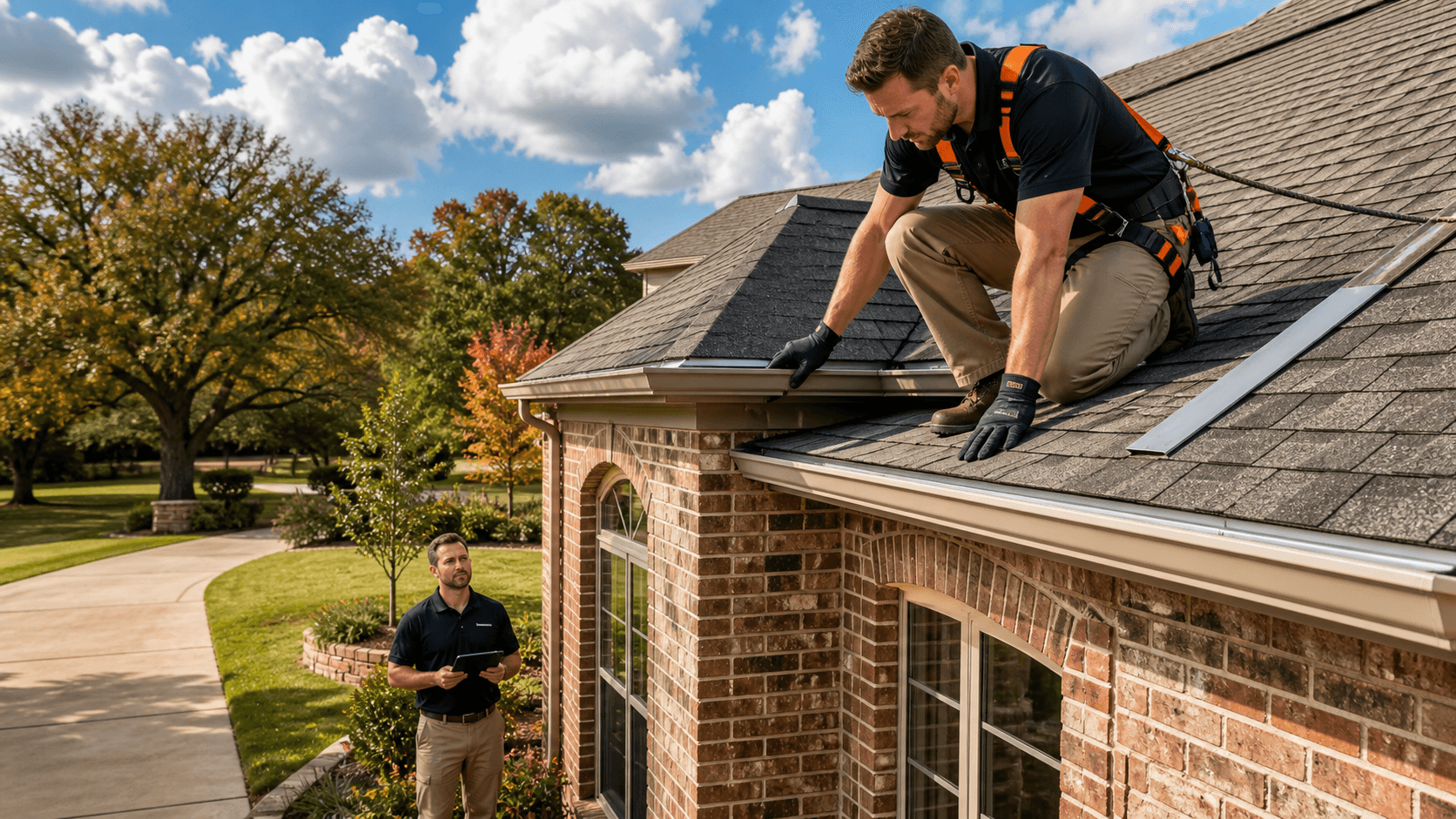
- Getting on the roof, where it's safe, to inspect shingles, vents, valleys, and flashing
- Tracing any water paths along framing, not just sealing the visible drip
A little caulk around a window or vent from the inside might make you feel better for a while, but it rarely solves the real problem above the ceiling.
Flashing, Chimneys, and Valleys That Rot From the Inside
Flashing is the thin metal that keeps water out where different parts of your roof meet. You'll see it around chimneys in older Dallas neighborhoods, along roof-to-wall areas on second stories in Allen or Plano, and in valleys over porches in places like Richardson and Lake Highlands.
When flashing's done poorly or has aged out in our sun and storms, small gaps open up. Those gaps don't always show up as a big obvious leak right away. Instead, water can:
- Slide behind brick, siding, or stone
- Soak the sheathing and insulation behind the wall
- Slowly rot the decking and framing around the chimney or wall
What we see on site a lot around DFW looks like this:
- Soft or spongy decking right around chimneys or walls
- Builder-grade flashing that's too short or not properly lapped
- Sealant baked and cracked from Texas heat
At that point, a simple reseal is usually not enough. By the time you notice the interior sign, the real fix often means cutting out rotten decking, reframing around the chimney or wall, replacing underlayment in that area, then installing new, correctly layered flashing.
The only honest way to know if you're looking at a quick repair or a surprise rebuild is to open things up. That means carefully lifting shingles, exposing the wood underneath, and documenting what we see with clear photos so you understand the difference between "patch it" and "we need to rebuild this section."
Slow Leaks That Turn Into Mold, Sagging, and Structural Work
Not every leak shows up as a dramatic drip. Slow attic leaks can do more damage over time because people don't feel any urgency. A little musty smell in a Garland hallway, a ceiling in Mesquite that looks just a bit wavy, these are the quiet warning signs.
Long-term moisture can:
- Break down OSB or plywood roof decking
- Rust out nails and fasteners
- Weaken trusses and framing members
- Encourage mold growth on framing and drywall if conditions are right
What might start as a missing shingle, a nail pop, or a cracked pipe boot can, after a couple of storm seasons, turn into a project that includes:
- Opening sections of ceiling or wall to reach the damage
- Removing wet or moldy insulation
- Treating any affected framing so it can stay in place when possible
- Rebuilding drywall, texture, and paint
Our approach on these jobs is simple and steady. We open only what we need to see, not half your house. We document what we find so you're not guessing. If we uncover electrical, HVAC, or other trades, we bring in licensed pros and coordinate that work so it gets done right. We'll lay out options based on what's actually there, not what someone's afraid might be there.
When "Simple" Roof Repair Turns Into Interior Remodeling
A lot of roof repair in Dallas, TX stays on the outside, but not all of it. Leaks over kitchens in Lake Highlands, master suites in Frisco, or converted garages in Grand Prairie tend to show up right over finished spaces you use every day.
A realistic project path often looks like this:
- Step 1: Find and repair the roof leak so more water doesn't come in
- Step 2: Check the attic, insulation, and framing under that leak
- Step 3: Discover soaked insulation, stained or sagging drywall, or damaged trim
- Step 4: Shift into interior repair so the room looks like it did before the storm
When one team handles both the exterior and interior, you get:
- Less finger-pointing about who caused what
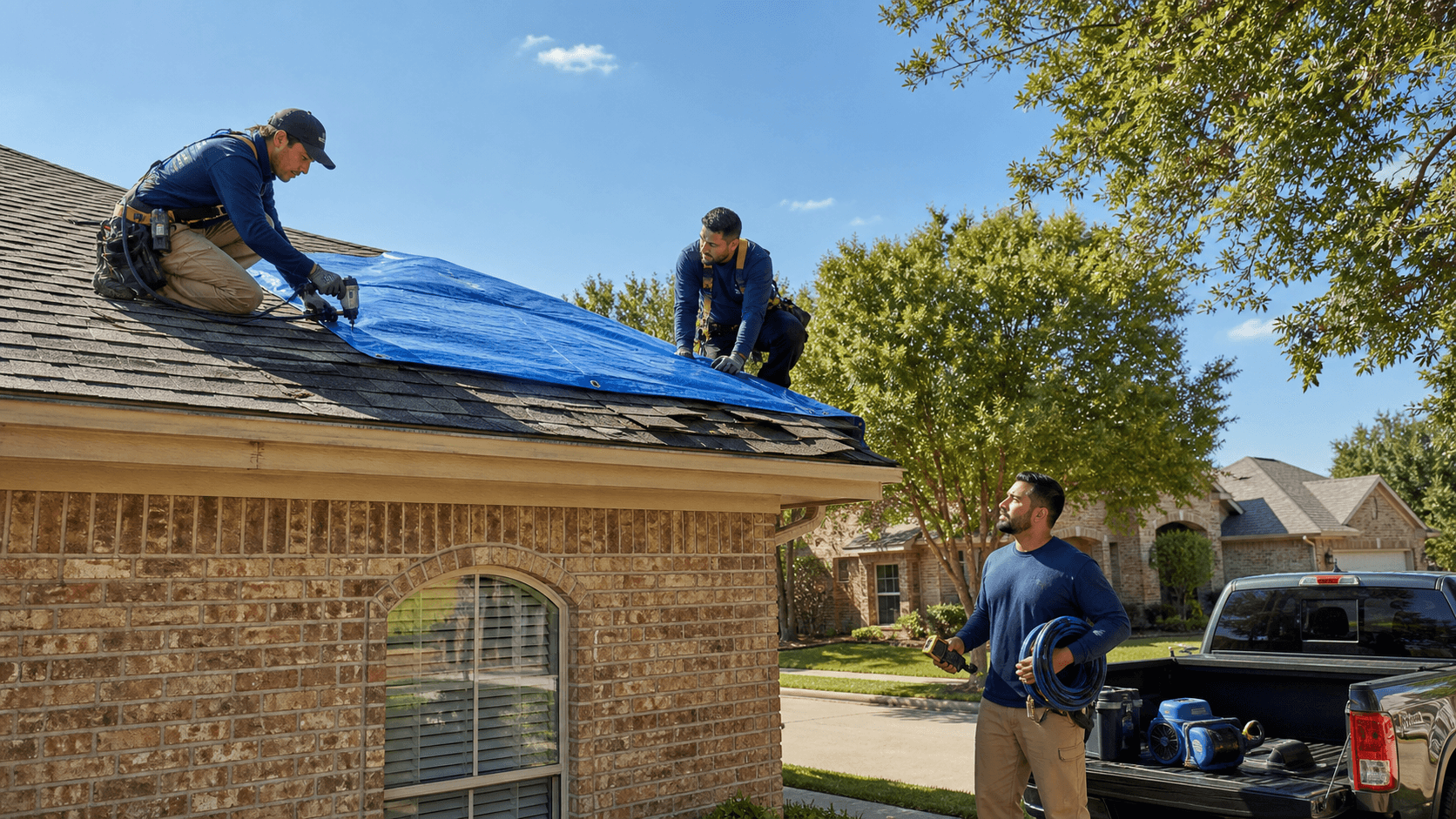
- Tighter scheduling from emergency tarp to final paint
- A cleaner finish, since the same crew understands how the damage happened
We're not out to turn every wet ceiling into a full remodel. If we can make a tight, clean repair that disappears once it's painted, that's the route we take. But if the damage's already there, we'd rather walk through honest options to fix it right once, instead of patching something that's going to fail again.
How to Catch Roof Trouble Before Dallas Storm Season
In North Texas, early fall's a smart time to take stock of your roof. Summer heat has already had its turn, and the stronger fronts with wind and hard rain aren't far behind. Catching problems now often keeps a small fix from turning into framing and drywall work down the road.
A simple homeowner checklist:
- From the curb, look for missing, cracked, or curled shingles
- Check gutters in places like Flower Mound and Carrollton for heavy shingle granules
- Note any ceiling stains, even faint ones, especially after a storm
- When it's safe, peek into the attic after a good rain for damp insulation or light where it shouldn't be
A focused inspection from a contractor should include walking the roof where it's safe, checking flashing and penetrations like vents and skylights, and looking at attic decking and ventilation from the inside. The goal's to find weak points while they're still simple to handle.
Catching issues at this stage is how you keep a straight-up roof repair in Dallas, TX from turning into new drywall, trim, and even flooring after the next big storm line rolls across North Texas.
When That Ceiling Spot Starts to Worry You
If you're staring at a ceiling stain, heard a drip during the last storm, or picked up a loose shingle in the yard, that's your roof asking for attention, not a reason to feel embarrassed. Small problems are normal in our climate. Letting them sit is what turns them into major repairs.
At Apex Point Services, we're a family- and veteran-owned general contractor, and we look at your house the way we want ours treated. That means clear assessment, photos of what we find, a written scope that explains what's urgent and what can wait, and no games or surprise add-ons. When a leak touches electrical, plumbing, or HVAC, we don't do that work ourselves; we coordinate licensed trades so it's handled the right way.
If something on your roof has started to bother you, don't wait for the next storm to test it. Or send a few photos, and we'll tell you if it's something to watch or something to fix now, so a small leak stays a small job across Dallas, Fort Worth, and the rest of North Texas.
Get Started With Your Project Today
If your roof is showing signs of damage or leaking, we are ready to help you protect your home with timely, reliable service. Learn more about our roof repair in Dallas, TX and see how Apex Point Services can address issues before they become costly problems. Our team will walk you through your options and provide a clear, straightforward estimate. Reach out today through our contact page to schedule your inspection.