Don't Ignore These Warning Signs After a Dallas Storm
Storms are part of life in Dallas. Strong wind, heavy rain, and hail can move in fast, then be gone just as quickly. Your roof takes the hit every time, even when the rest of your home looks fine.
Catching storm damage early is one of the best ways to protect your home. A few loose shingles or a tiny leak might not look like much at first, but they can turn into rot, mold, and serious structural problems if they sit too long. Many homeowners only notice damage when water starts dripping inside, and by then the fix is usually bigger and more stressful.
We work on roofs and exteriors across North Texas, so we see what these storms can do up close. In this guide, we will walk through clear, simple signs your roof may need storm damage repair in Dallas, TX, right now, plus smart steps to take before the next round of storms rolls in.
Visible Roof Damage You Can Spot From the Ground
After a storm, the first check is outside. You do not need to get on a ladder. In fact, we do not recommend it. You can spot a lot just by walking around your yard and driveway.
Start by looking at your shingles. Keep an eye out for:
- Missing shingles that leave dark patches
- Shingles that look cracked, torn, or curled at the edges
- Shingles that look bruised or have small round marks from hail
- Areas where shingles look shiny or "bald" compared to the rest
Hail hits can leave little dimples on asphalt shingles. From the ground, these may look like darker spots or areas where the shingle surface looks rough. Even if only a small area is missing or damaged, it can allow water to get under the rest of the roofing system and travel across the roof deck.
Next, look at roof accessories and metal parts. Pay attention to:
- Bent or lifted metal flashing around chimneys and walls
- Roof vents that look crooked or loose
- Damaged or cracked rubber boots around pipes or skylights
These spots are some of the first places storms can force water in. A tiny opening around a vent can turn into a steady drip inside your attic after the next hard rain.
Finally, check your gutters and downspouts. After a storm, are you seeing piles of shingle granules, like coarse sand, in the gutters or at the bottom of downspouts? Heavy granule loss means:
- Your shingles are aging faster than they should
- The protective top layer is wearing off
- The roof has less protection from harsh sun and heat
Granules wash off most heavily right after hail or strong wind events. If you see a lot at once, it may be time for a full inspection.
Indoor Clues Your Roof Is Leaking After a Storm
Not all storm damage shows up outside. Sometimes, the first clues are inside your home, especially a few days after heavy rain.
Look up at your ceilings and upper walls. Warning signs include:
- Brown or yellow water rings
- Peeling or bubbling paint
- Soft, sagging spots in drywall
These stains often mean water is making its way past shingles or flashing and soaking into your ceiling materials. Even if the spot dries out between storms, the leak is still there, ready to open up again during the next downpour.
Another clue is smell. If you notice a musty odor in your attic, closets, or upstairs rooms that will not go away, you may have:
- Damp insulation
- Trapped moisture in wood framing
- Early stages of mold growth
Storm damage can let humid air and moisture into spaces that are supposed to stay dry. Over time, this can affect indoor air quality and comfort.
You might also see changes in your energy bills. When roofing materials, underlayment, or attic ventilation are damaged, they can let hot, sticky Dallas air into your attic and living space. That can lead to:
- Rooms that feel hotter or stuffier than usual
- Drafty spots near ceilings or around attic access doors
- AC systems running longer to keep up
If your roof was hit by a storm and you notice these changes soon after, it is worth having a professional check the roofing and attic.
High-Risk Damage That Demands Emergency Help
Some storm damage should never wait. If you see any of these signs, your roof might have serious issues that need fast, professional attention.
First, look at the shape of your roof from the street or backyard. A healthy roof line should look straight and even. Call for help quickly if you notice:
- A sagging or dipping ridge line
- Large areas that look sunken between rafters
- Soft spots you can feel when walking in the attic
These can point to damaged roof decking or framing. Heavy storms can weaken supports, and added moisture makes wood even softer over time.
Active leaks are another clear emergency. Warning signs include:
- Water dripping from light fixtures or ceiling fans
- Water running down interior walls
- Puddles forming on floors during or right after a storm
If water is already inside, the goal is to limit damage and protect wiring, drywall, and flooring until repairs can be made.
Also check for any areas where the top layer of your roof is missing. From the ground, you might see:
- Whole patches of shingles blown off
- Shiny nails, bare wood, or exposed underlayment
- Loose, flapping shingles that move in the wind
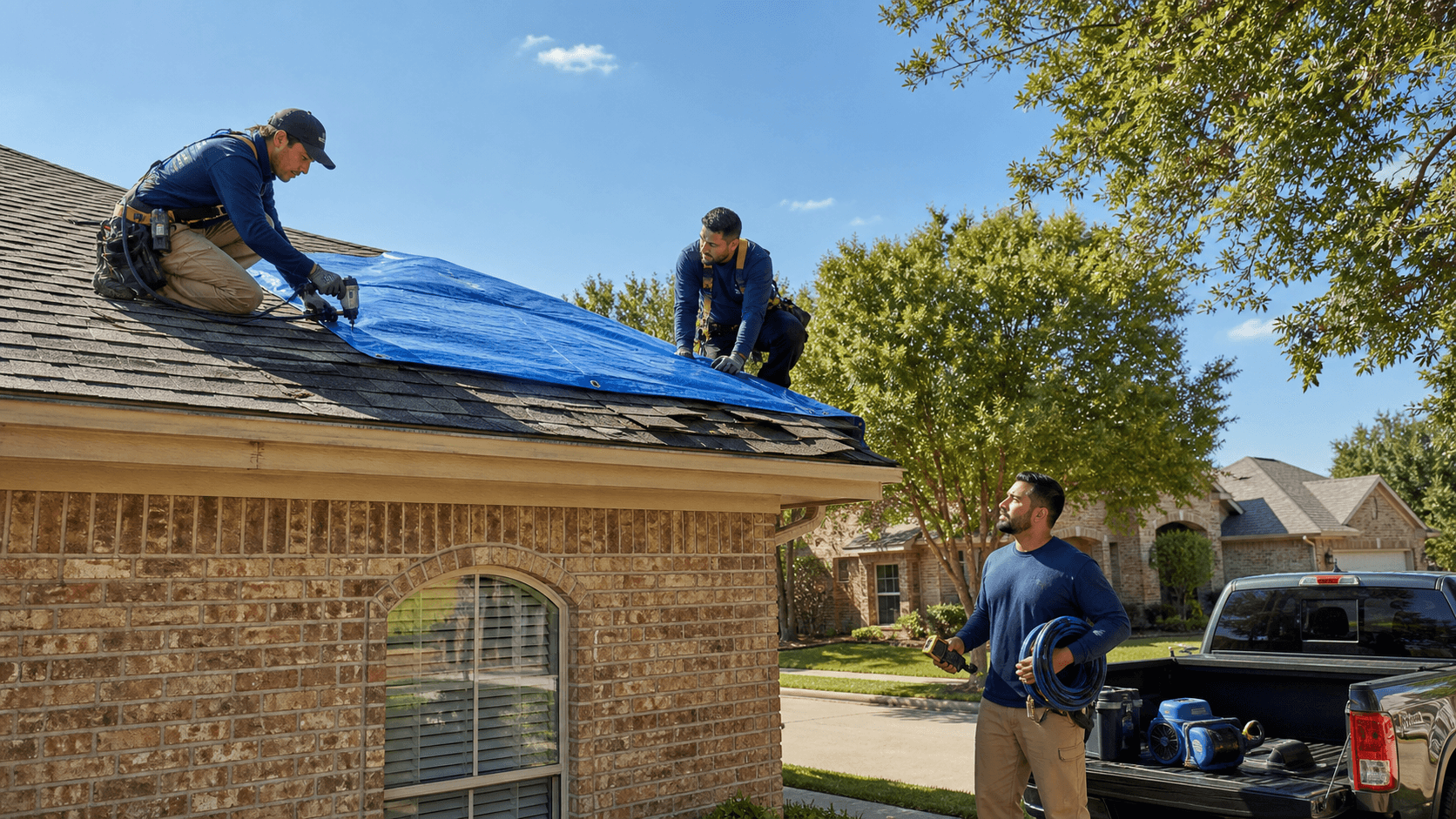
In these cases, a professional will typically install a temporary tarp and plan storm damage repair in Dallas, TX as soon as it is safe, so your home is ready before the next storm.
Hail, Wind, and Debris Damage Common in Dallas
Not every type of storm damage looks dramatic from the yard. Some of the most serious problems start small and quiet.
Hail is a good example. Even when hailstones look "small," they can:
- Bruise shingles and break the fiberglass layer inside
- Knock off protective granules
- Create tiny cracks that grow each time the roof heats up
From the ground, the roof may look almost normal, while water slowly works into those weak spots over time.
Wind is another big factor in Dallas storms. Strong gusts can:
- Lift shingle edges and break their seal
- Loosen flashing around roof edges and valleys
- Shift tiles or panels just enough to open a path for water
You may not see a leak right away. Often, water follows these lifted edges along nails or seams, then shows up later as stains inside.
Flying debris and tree branches can also cause hidden trouble. After a storm, check for:
- Limbs resting on the roof or stuck in the gutters
- Dents or bends in gutters and metal fascia
- Sections of shingles that look cracked or punctured
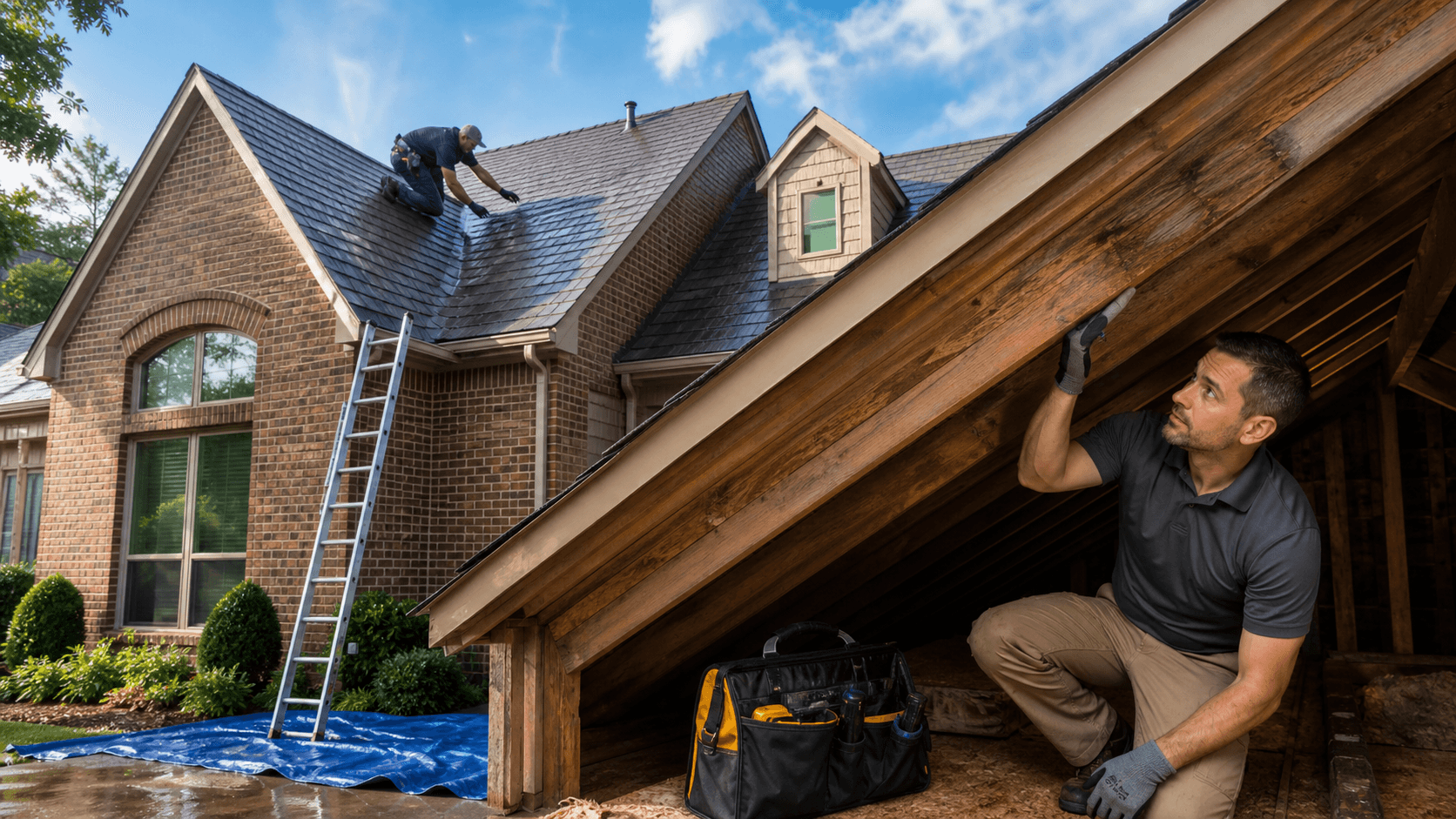
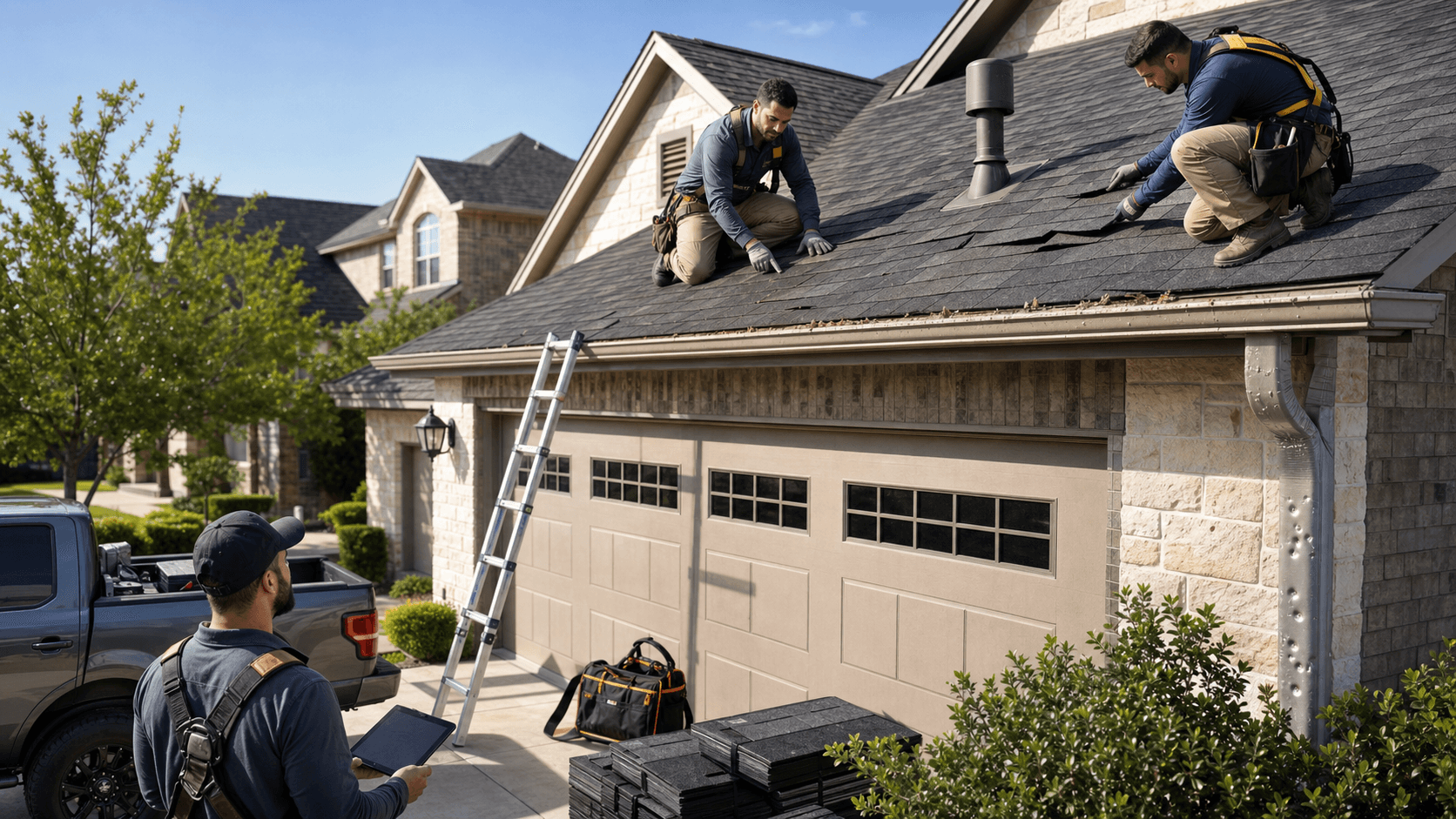
Having a local roofing professional inspect these areas is safer than climbing up yourself. They can look closely at shingles, seams, and decking around any impact spots.
Your Next Steps for Fast, Reliable Storm Repair
Once the storm passes, there are a few smart steps to help protect your home until a pro can take a closer look. From ground level, take clear photos or short videos of anything that looks off, including roof patches, gutters, and damaged siding. Inside, check your attic, ceilings, and upper walls, and use buckets or plastic sheeting to catch drips and shield furniture if you see active leaks.
Before you start an insurance claim, it often helps to talk with a trusted local roofing contractor who knows storm damage repair in Dallas, TX. A North Texas team like ours can inspect the roof safely, point out damage you might not see on your own, and prepare clear notes and photos that fit what insurers usually ask for. With a full inspection in hand, it is easier to plan repairs, protect curb appeal, and keep your home and family ready for whatever the next storm brings.
Get Started With Your Project Today
If your property has been hit by severe weather, we are ready to inspect the damage and guide you through the next steps. At Apex Point Services, our experienced team provides comprehensive storm damage repair in Dallas, TX that addresses both visible problems and hidden issues before they get worse. We will work around your schedule, coordinate with your insurance when needed, and keep you informed from start to finish. Reach out today so we can help you restore safety and comfort to your home.