
Flat Roof Leaks in Dallas Don't Fix Themselves
Water stain on the ceiling, mystery drip after a storm, but a roof that looks flat and fine from the ground. That's how a lot of flat and low-slope roof problems start around Dallas. You may only see it after a big North Texas thunderstorm rolls through, then it dries up and you forget about it for a while.
Flat and low-slope roofs are common on older homes in East Dallas, townhomes in Oak Lawn, and on those modern, commercial-style homes in Plano and Richardson. They look clean and simple, but when there's a leak, it can be hard to track down and even harder to fix for good. Quick patches and guesswork usually just kick the can down the road.
Done right, flat and low-slope roof repair around Dallas means no guessing, no band-aid fixes, and no six trips out for the same leak. You should know if you're dealing with a small repair or the start of a bigger problem, what materials hold up in our heat and storms, what a proper repair looks like, and how to be ready before fall storms and winter rain hit again.
Why Flat And Low-Slope Roofs Leak Around Dallas
Flat and low-slope roofs don't shed water like a steep shingle roof. They rely on:
- Slow drainage toward drains or scuppers
- Waterproof membranes instead of overlapping shingles
- Tight seams and flashing to keep water from finding a way in
When any part of that system fails, water sits where it shouldn't, and a small issue can turn into a leak pretty fast.
North and East Texas weather is hard on these roofs. We see:
- Heavy fall rains that test every drain and scupper
- Hail that bruises membranes and knocks off surfacing
- Strong gusts ahead of cold fronts that blow branches and trash onto the roof
- Long hot summers that cook seams, dry out sealant, and warp flashing
The usual trouble spots aren't a surprise. We run into the same problems on flat and low-slope roofs in Lakewood, Garland, Mesquite, Frisco, McKinney, and all over the area:
- Clogged drains and scuppers that leave ponding water after rain
- Low spots where water sits for days
- Cracked seams on older modified-bitumen roofs
- Old tar or sloppy patch jobs that hide damage but don't seal it
- Dried-out sealant around vents, skylights, and pipe boots
- Poorly flashed parapet walls and edge metal
On many older homes and additions, you'll see modified-bitumen, aging TPO or PVC, or even tar-and-gravel. Each one fails in its own way, but the risk's the same.
If you ignore that small ponding area or tiny crack before late-season storms, water can soak the insulation, feed mold in the decking, and end up inside your home. By the time you see peeling paint or sagging drywall, the roof damage has usually been there a while.
How We Track Down The Real Source Of A Flat Roof Leak
Finding the real source of a leak on a flat roof isn't like spotting a missing shingle. Water can travel sideways under the membrane, then show up ten feet away in your bedroom ceiling. That's why a proper inspection has to be systematic.
On the roof, we look at:
- How the roof slopes toward drains, scuppers, and gutters
- Any ponding areas or soft spots that feel spongy underfoot
- Seams in the membrane for cracks, splits, or lifting edges
- Flashing at parapet walls, skylights, vents, and HVAC stands
- Old patches or coatings that might be hiding trapped moisture
Inside, we match ceiling stains to roof features. A stain near an interior wall might line up with a pipe penetration or seam joint outside. We know water can run along decking, hit a low spot, and only then drop through onto insulation and drywall.
A lot of flat roofs get turned into "caulk and go" visits. Someone smears sealant over a suspect area and leaves. That might slow a leak for a bit, but if the real problem's a failed seam, rotten decking, or a bad flashing detail, no amount of surface goop fixes it.
Coating an entire roof without understanding what's going on underneath can even trap water where you can't see it.
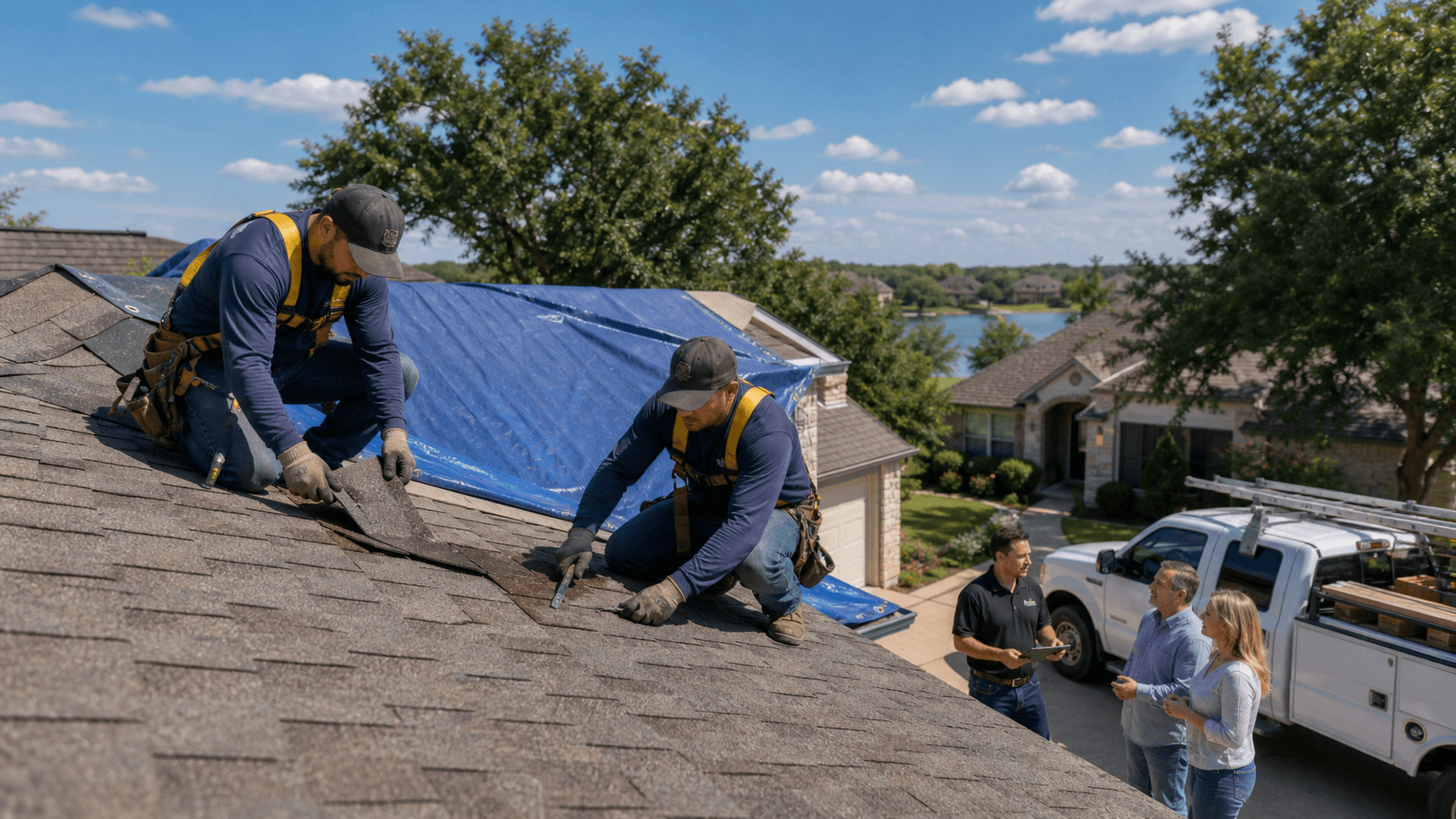
A careful inspection can include simple tools like moisture checks around suspect spots, gently lifting a corner of the membrane where it's already loose, checking under old patches, and looking for rusted fasteners on any low-slope metal sections. The goal is to see what the roof's actually doing, then show you what we see in clear language so you can decide the next step.
Smart Repair Options For Flat And Low-Slope Roofs
Once we know what's really going on, we can talk through repair options that make sense for your roof type and your plans for the home.
Common repair methods on Dallas-area flat and low-slope roofs include:
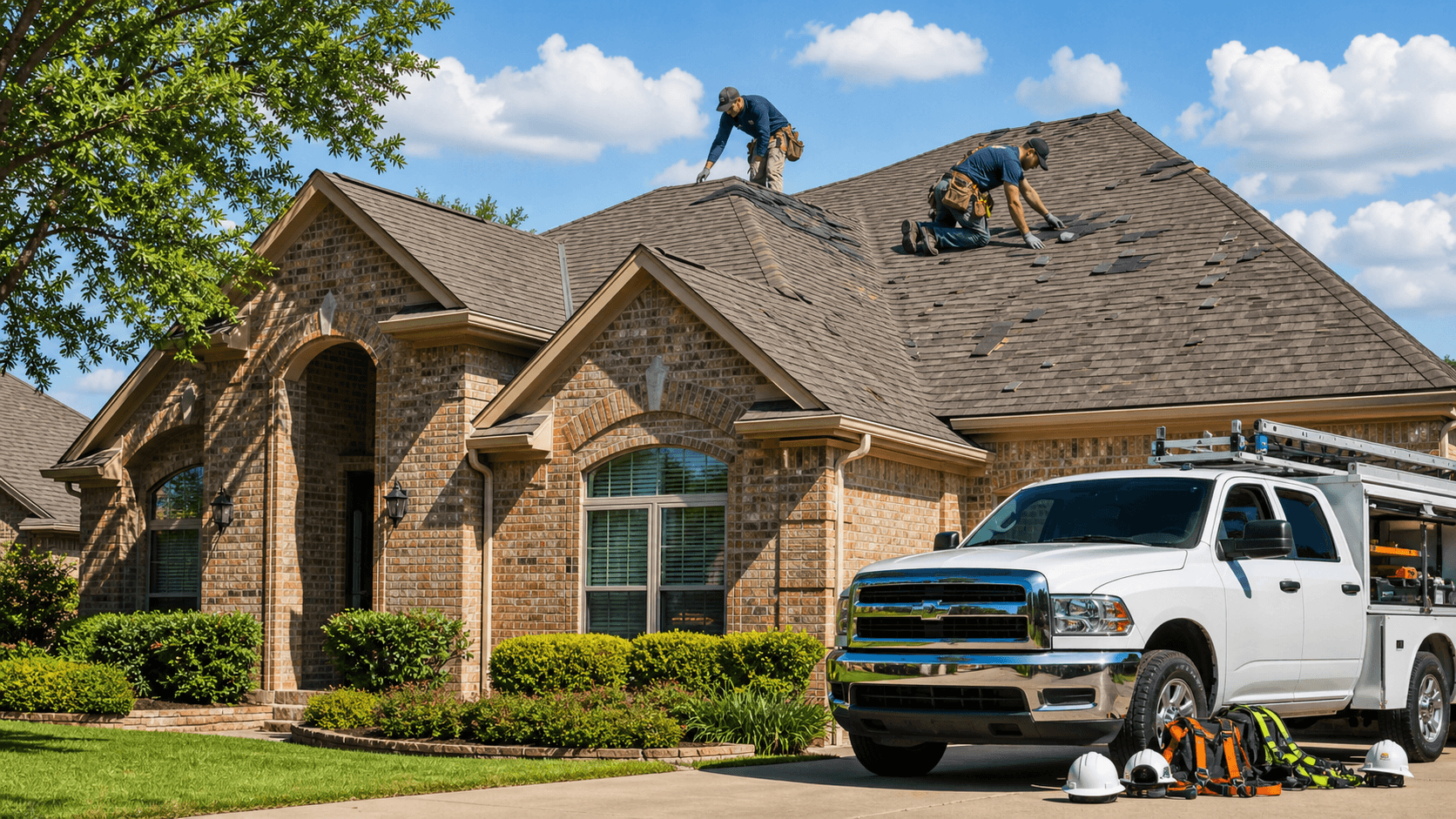
- Patching modified-bitumen with compatible materials and proper heat or adhesive
- Welding new TPO or PVC patches that tie into the existing membrane
- Re-sealing or re-taping seams that have opened up
- Rebuilding bad flashing at parapet walls, skylights, and roof edges
- Pulling and replacing rotten decking under failed areas
Roof coatings can play a smart role, but they're not magic paint-on fixes. Coating over wet insulation, loose seams, and soft spots just hides problems and makes later repairs harder. A coating should go on a dry, sound roof that's already had problem areas corrected.
There's always a difference between the cheapest thing for today and the cheaper path over the next several years. Chasing one small leak after every storm gets old fast if the whole back section of the roof's failing.
Sometimes it makes more sense to:
- Tackle the worst half or third of the roof now
- Make solid repairs in secondary areas, not just surface touch-ups
- Plan for phased work instead of pretending a worn-out roof will bounce back
Fall's often a smart time to get this done around Dallas, before colder, wetter spells and surprise fronts arrive. Temperatures are easier on roofing materials, and catching issues now can save you from dealing with leaks in the middle of winter rain.
What To Expect When Your Dallas Flat Roof Gets Repaired
The process should feel straightforward, not like a mess you have to manage on your own. From the first call, you should know who you're talking to, when someone can get to your roof in areas like Dallas, Allen, Rockwall, Rowlett, or Forney, and what that first visit will cover.
On the repair day, a typical flat or low-slope job looks like this:
- Crews arrive within the agreed time window
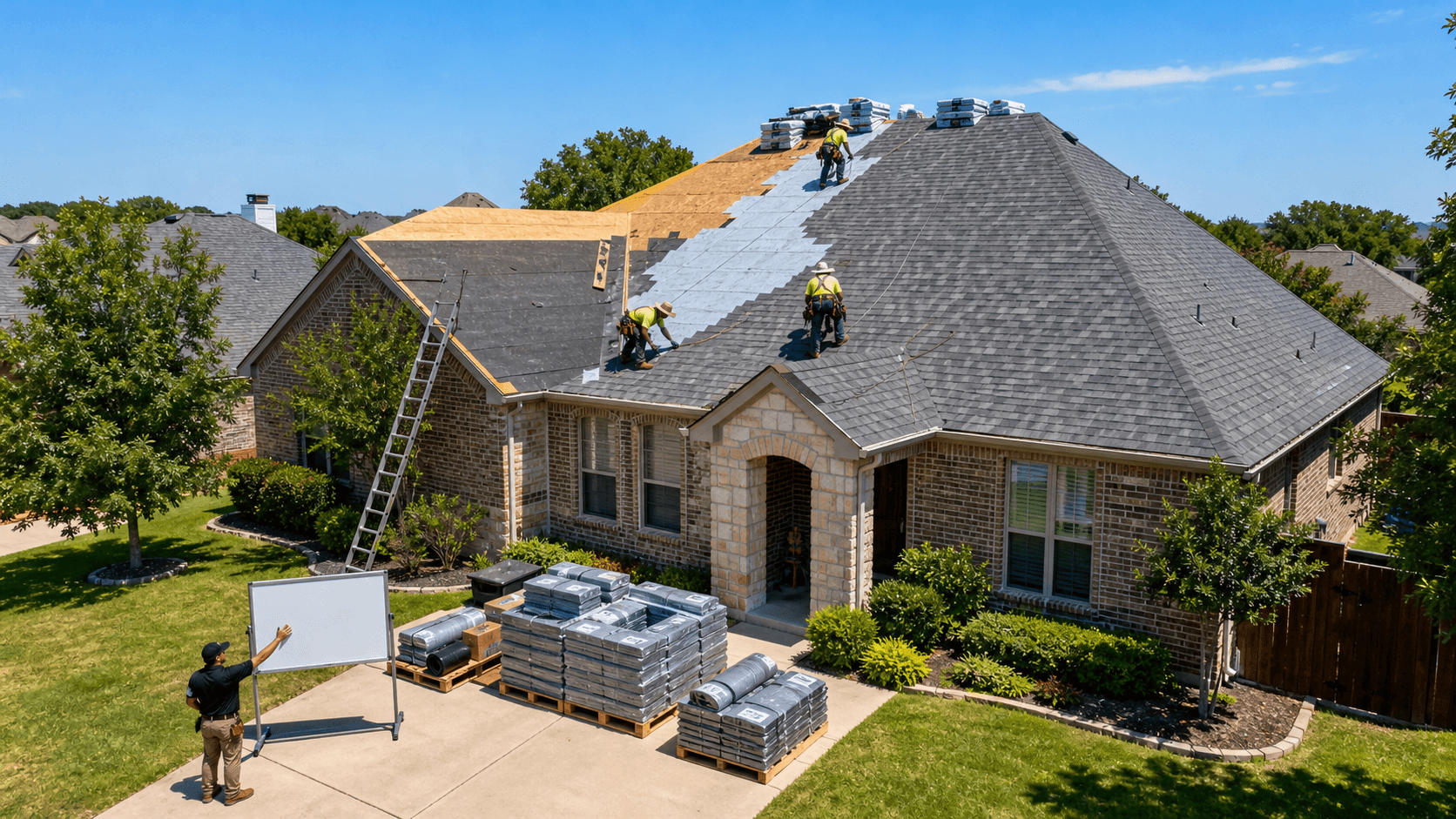
- Tarps or boards go down where needed to protect landscaping and driveways
- Materials are staged in a way that avoids blocking your garage or front door
- Noise's kept as reasonable as possible, but you'll hear some foot traffic and tools
- Most repairs finish the same day, unless weather or hidden damage changes the plan
If the roof problem ties into other systems, like electrical at rooftop equipment, plumbing vents, or HVAC stands that need work beyond the roof surface, we coordinate with licensed trades rather than wing it. That way, the repair doesn't create a new problem for another system.
Cleanup matters. When the work's done, debris should be removed, drains and gutters checked for fresh blockage, and the roof walked one last time.
We like to share photos so you can see what was done and what to watch when the next big storm hits. If a repaired area still has issues, our job's to come back and sort it out, not argue about whose fault it is.
If you've got a stain on the ceiling or a flat roof that worries you after a DFW storm, reach out for a no-pressure look and a clear estimate. You'll talk to Roger, not a call center.
Get Started With Your Project Today
If you are seeing signs of roof damage or leaks, now is the time to schedule professional roof repair in Dallas, TX with Apex Point Services. We will assess your roof, explain your options clearly, and recommend the most practical solution for your home or business. Reach out today to set up an appointment or request a detailed estimate, and if you prefer, you can also contact us with any questions before you get started.