When North Texas Storms Turn Your Roof Into a Problem
Storm damage roofing in Rockwall, TX is what you deal with after those spring hailstorms, late summer wind events, and surprise fall fronts rolling off the lake have their say. One rough night can turn a roof you never think about into the main problem on your mind. You wake up, see loose shingles in the yard, maybe a dark spot on the ceiling, and neighbors are already talking about calling their insurance.
What comes next shouldn't be panic or guesswork. Real storm damage work is more than slapping on a quick patch. It means a careful inspection, clear documentation, smart repairs, and dealing with insurance in a way that makes sense. As a family- and veteran-owned general contractor working across Rockwall, Dallas, Fort Worth, and East Texas, we focus on a straightforward, no-drama approach that respects your home and your time.
What Storms Actually Do to a Rockwall Roof
Around Rockwall, we see the same patterns over and over after strong weather. Hail, wind, and heavy rain each hit your roof in their own way, and they often show up together.
Here's what storms can do to your roof:
- Hail can bruise and fracture asphalt shingles
- High winds can lift, crease, or tear shingles right off the deck
- Driving rain can push water under any loose or damaged areas
- Debris, like small branches, can crack or loosen roofing materials
Not all damage jumps out at you from the driveway. Some of the most serious issues start small:
- Granule loss on shingles that exposes the asphalt underneath
- Tiny impact marks that weaken the shingle over time
- Lifted flashing around chimneys, walls, and valleys
- Loose seals around vents, pipe boots, and skylights
If you ignore those signs, problems can build up quietly. Water finds the weak spots, then you end up with slow leaks, warped roof decking, and even mold in the attic. A roof that might have lasted many more years can be cut short, and what could've been a targeted repair turns into a full replacement down the road.
Different roofing materials in Rockwall neighborhoods show damage in different ways. Asphalt shingles can lose granules and crack. Metal roofs might show dents on panels and flashing. Tile roofs can get chipped or broken pieces, especially at the edges and ridges. The key is knowing what to look for on each type so you're not guessing from the ground.
What a Real Storm Damage Roof Inspection Looks Like
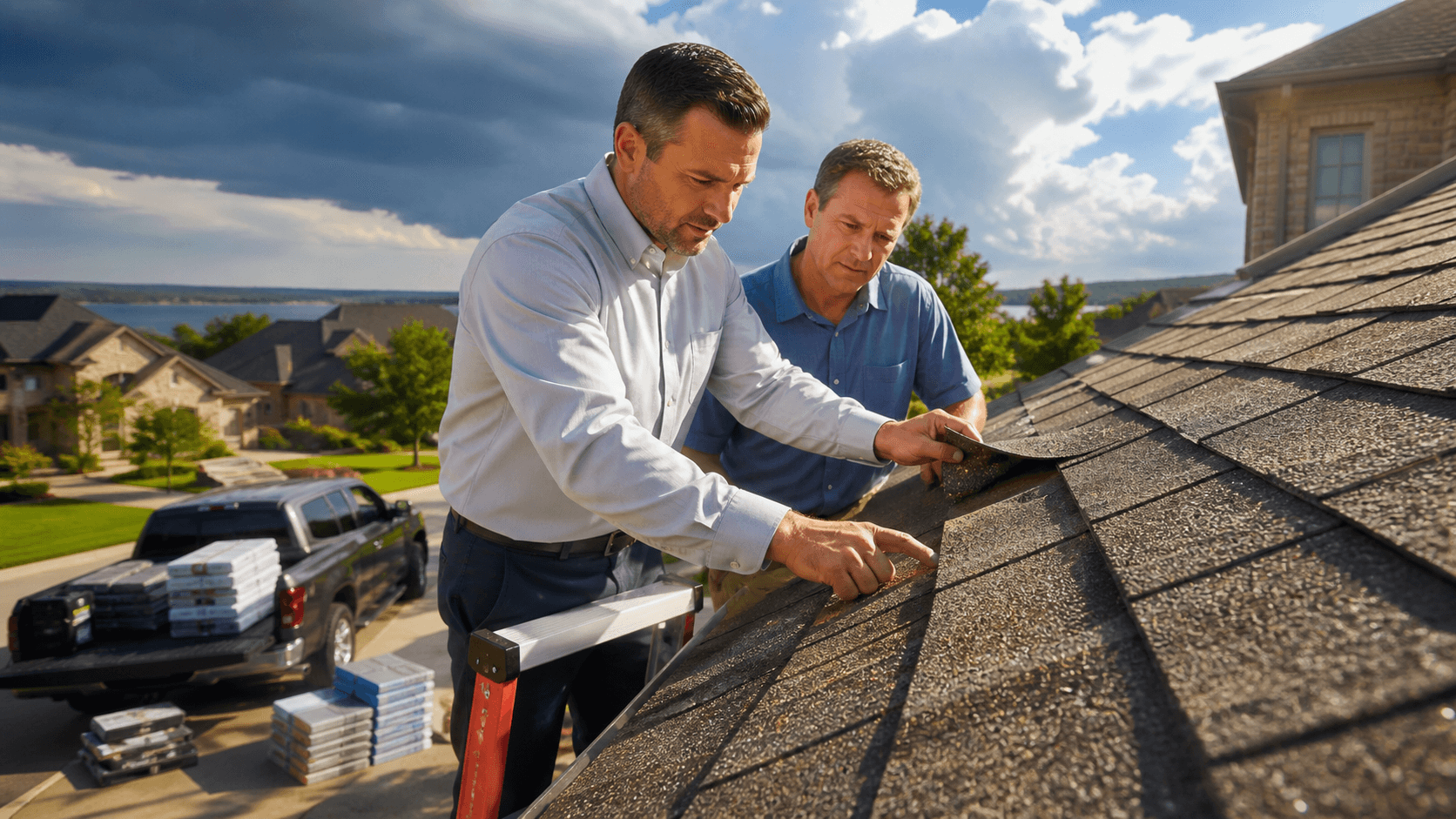
A solid storm damage roof inspection in Rockwall follows a clear plan. It's not a five-minute glance and a sales pitch. It's a step-by-step check of the whole roofing system.
We start on the ground with an exterior walk-around. We look at:
- Shingles that are missing, crooked, or out of place
- Soft metal damage on gutters, downspouts, and vents
- Impact marks on window screens, fencing, and A/C units that point to hail size
If the attic's accessible, we go inside next. There we look for:
- Fresh water stains on the decking or insulation
- Damp insulation or a musty smell that hints at hidden leaks
- Daylight coming through where it shouldn't be
When roof conditions and safety allow, we move to a roof-level review. On the roof, we check:
- Hail hits on shingles and soft metals
- Creased or torn shingles that may not be missing yet
- Exposed nail heads, cracked pipe boots, and worn sealant
- Bent or loose flashing at chimneys, walls, and valleys
Documentation is a big part of this process. We take clear photos and notes so you have a written scope of what we see. That way, when you meet with an insurance adjuster, you're not trying to describe damage from memory. You can show exactly what's going on and where.
Safety and honesty matter here. We're not climbing on a slick roof in the middle of a storm. We're also not calling normal age-related wear and tear storm damage just to chase a claim. The goal is a clear, accurate picture of your roof, not drama.
Working With Insurance Without Losing Your Mind
After a Rockwall storm, the insurance process usually follows the same basic path. You don't have to love it, but it helps to know how it works.
Most homeowners go through steps like these:
- File a claim and receive a claim number
- An adjuster is assigned and sets a time to visit your home
- The adjuster inspects the roof and writes a report
- You compare their report with your contractor's findings
- The scope of work gets agreed on before repairs start
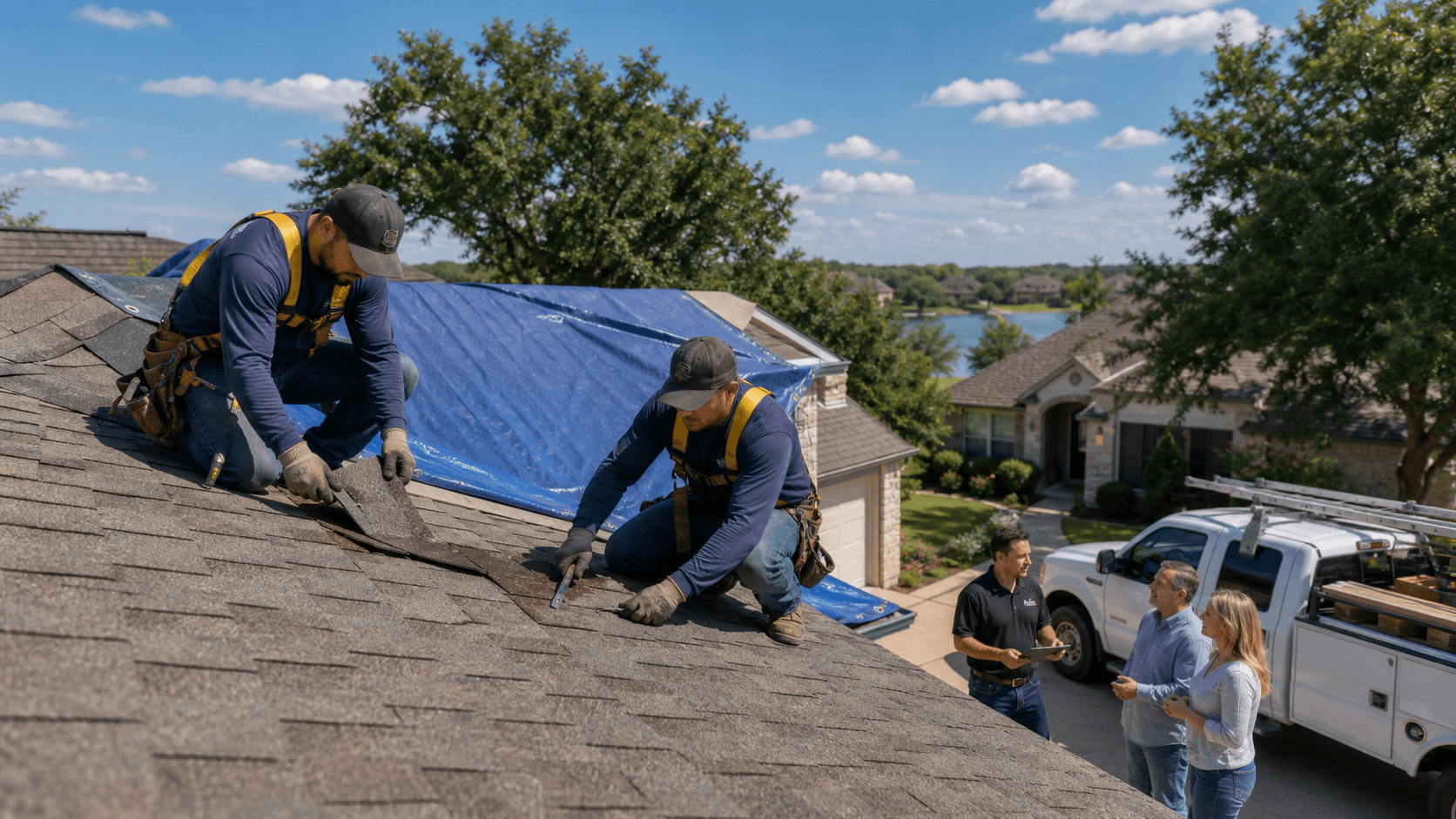
A contractor can support you by meeting with the adjuster if you want another set of eyes there. We can walk you through what the adjuster's looking at and help you spot obvious misses in their report, like skipped slopes or missed flashing issues. What we don't do is set your coverage, promise approvals, or play games with numbers. The point is to make sure the real damage is clearly documented and understood.
Timing matters after a late-season storm hits North Texas. You have to work around inspection schedules, adjuster visits, and material ordering. If more heavy rain is in the forecast, we focus on temporary protection like tarps or targeted dry-in work so you're not taking on more damage while the paperwork moves along.
From Tarp to Finished Roof and When a Patch Is Enough
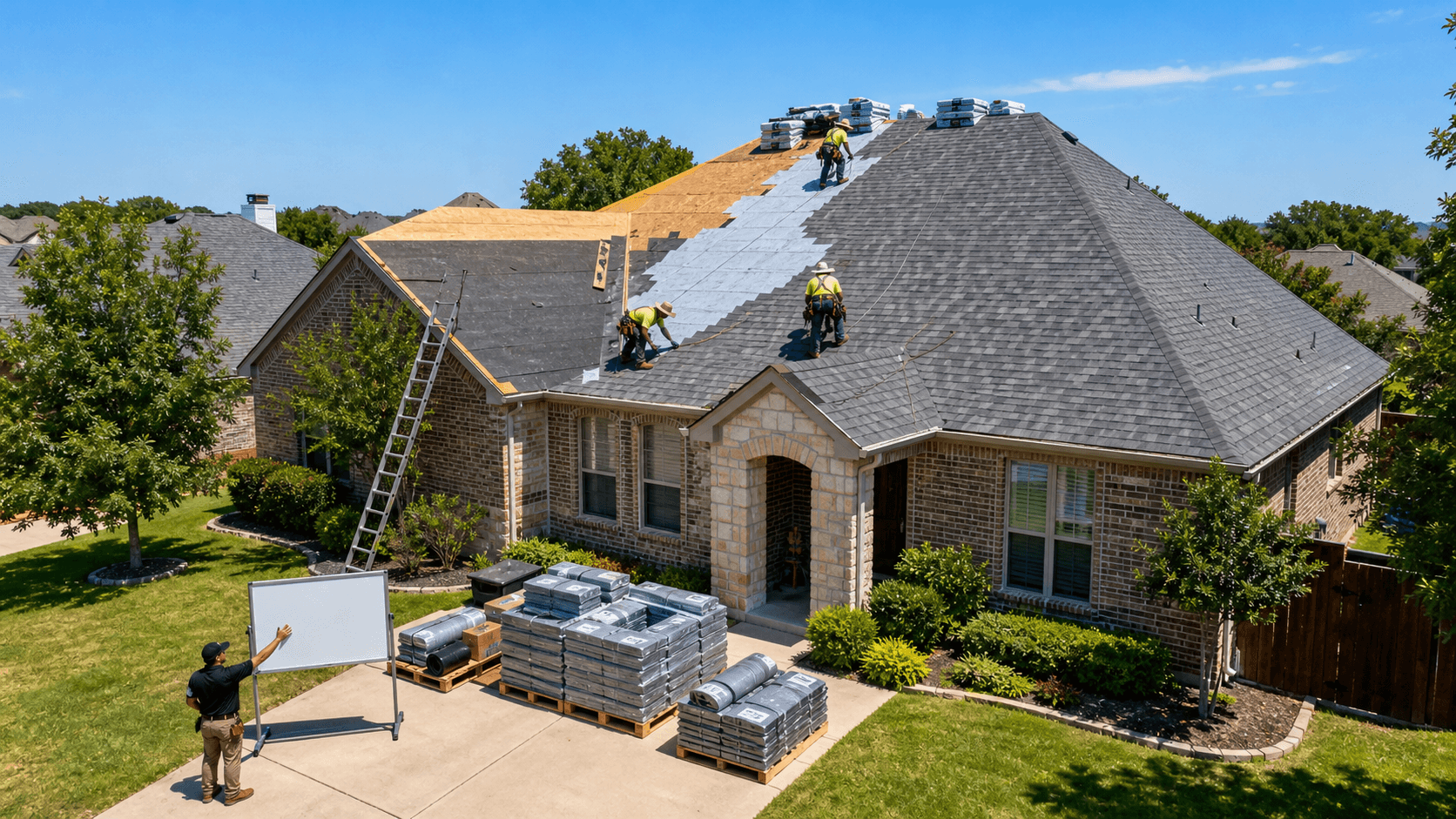
Once the claim and budget are set, the roof repair or replacement process follows a clear sequence. It usually goes like this:
- Final measurements and confirming roof details
- Material selection so color and style match your home
- Scheduling and pulling any needed permits
- Tear-off of damaged roofing and inspection of the decking
- Repairs to decking, then installation of underlayment
- Ice and water shield in key leak areas, like valleys and around chimneys
- New flashing, ridge vents, drip edge, and shingles or panels installed
- Cleanup, including magnet rolling for nails and checking the yard
During the job, you can expect trucks in the driveway, some noise, and crews moving materials around. A careful crew will protect landscaping as best as possible and keep debris under control with daily cleanup. If the work needs licensed trades, like electrical for attic fans, we coordinate that so you're not stuck juggling multiple people.
Not every storm means you need a new roof. Sometimes a patch in the right place is the smart move. The choice comes down to the size and spread of the damage and the age and condition of the roof.
Here's how we think about it:
- Small, local damage, like a few missing shingles over a porch, can often be repaired
- System-wide damage, like hail bruising across every slope, usually points toward replacement
- Older roofs with lots of past repairs may not seal well if you only fix one area
- Newer roofs with isolated damage are often good candidates for targeted repairs
We walk homeowners through what we see and how a roof manufacturer would likely view that damage. The goal is to pick what makes sense long term, not just chase the bigger job. Many Rockwall homeowners also ask if they should get work done before stronger winter fronts move in. If the roof is open to leaks, the answer's usually yes, because cold, windy rain will only push more water into any weak spots.
Straight-Talk Next Steps After a Rockwall Storm
Storm damage roofing in Rockwall, TX shouldn't be about scare tactics or pressure. It's about getting a clear picture of your roof, building a fair plan, and doing solid work that stands up to the next round of weather. North Texas storms aren't stopping, so your roof has to be ready.
A simple way to start is to walk your property after a storm, take photos of anything that looks off, and check the attic for fresh stains or damp insulation. Then bring in a contractor you trust before you start juggling a dozen business cards from people knocking on your door. A calm, honest inspection and straight talk about repair versus replacement will tell you quickly if your roof just needs a patch or if it's time for bigger work.
When you're ready to get a professional set of eyes on your roof, reach out for a no-pressure inspection and estimate. You'll talk directly with Roger, not a call center, and you'll get a clear plan you can actually understand.
Roger's Roofing & Construction
1234 Main Street
Rockwall, TX 75032
(214) 555-1234
Restore Your Roof's Strength With Expert Local Help Today
If a recent storm has left your roof compromised, we are ready to respond quickly and professionally. Learn how Apex Point Services handles inspections, documentation, and repairs for storm damage roofing in Rockwall, TX so your home is protected again fast. Reach out today to schedule an inspection or request an estimate, or contact us with any questions about your next steps.