
When Hail Pounds Your Roof in Rockwall, What Happens Next
When a North Texas storm rolls across Rockwall and the hail starts hitting the roof, most homeowners think the same things: Is my roof leaking, will insurance help, and who can I trust to look at this? The noise fades, the sky clears, and now you are left wondering what is really going on up there. From the ground, the roof may look fine, but your gut tells you to pay attention.
A lot of folks worry about the next part. Storm chasers knocking on the door. High-pressure sales. Someone saying you need a full replacement when a repair would do the job. Those are fair concerns. Roof damage can be stressful, and it's hard to know who's giving you a straight answer.
At Pex Point Services, we handle roof repair in Rockwall, TX, with a calm, step-by-step process. No scare tactics, no guessing. In this article, we'll walk through what hail really does to your roof, how an honest inspection works, what repairs or replacement looks like, what to know about insurance, and when it's time to call in help.
How Hail Really Damages Rockwall Roofs
Hail hits different parts of your roof in different ways. Even on a single house, one slope may get hammered while another side barely sees a mark. The damage isn't always obvious from your driveway.
Common hail damage on Rockwall roofs includes things like:
- Bruised shingles where the impact softens or cracks the asphalt
- Granule loss that exposes the black backing of the shingle
- Cracked or broken shingles that can start to lift in the wind
- Dented metal vents, chimney caps, and gutters
- Torn or loosened flashing around chimneys, walls, and valleys
Rockwall weather makes this worse. Hot summers bake the shingles so they get brittle. Then a sudden storm blows across Lake Ray Hubbard, and that baked surface takes a hard beating. Older roofs, like the ones in many established neighborhoods, are more likely to crack or lose granules when hail hits.
A few key points about visible and hidden damage:
- From the ground, the roof may look "OK" while still having bruises or small cracks
- Hail spots might not leak right away, but they can shorten the life of the roof
- Lifted edges and missing granules make it easier for later rain to work under the shingles
You don't have to panic the night of the storm. But waiting months through more wind and rain can let water reach your decking, insulation, and ceilings. Catching problems sooner saves a lot of mess inside the house.
What an Honest Roof Inspection Looks Like After Hail
Once the storm has passed and you're concerned, the first step is a conversation. When you call for help with your roof in Rockwall, we'll ask a few simple questions:
- When did the storm hit your area?
- How old is your roof, if you know?
- Have you seen any water spots on ceilings or walls?
- Did you notice shingle pieces in the yard or granules by the downspouts?
From there, we work out a time to visit your property. After a big hail event, Rockwall can get busy, but the goal is always to get eyes on your roof as soon as it's safe.
On-site, a proper inspection means actually getting on the roof. We look closely at the slopes that faced the storm, checking shingles, ridges, valleys, vents, pipe boots, chimney flashing, and gutters. We take photos so you can see what we see instead of taking anyone's word for it.
Inside the home, we may also:
- Check the attic for damp insulation or dark spots on the wood
- Look at ceilings in bedrooms and living spaces for staining or soft spots
- Pay extra attention around chimneys, skylights, and bathroom vents
When we're done, we keep the talk simple and straight. We explain what's damaged, what still has good life left, and whether a repair, partial replacement, or full replacement makes the most sense. The goal is to give you clear options, not to push you into the biggest project.
From Temporary Fix to Full Roof Repair or Replacement
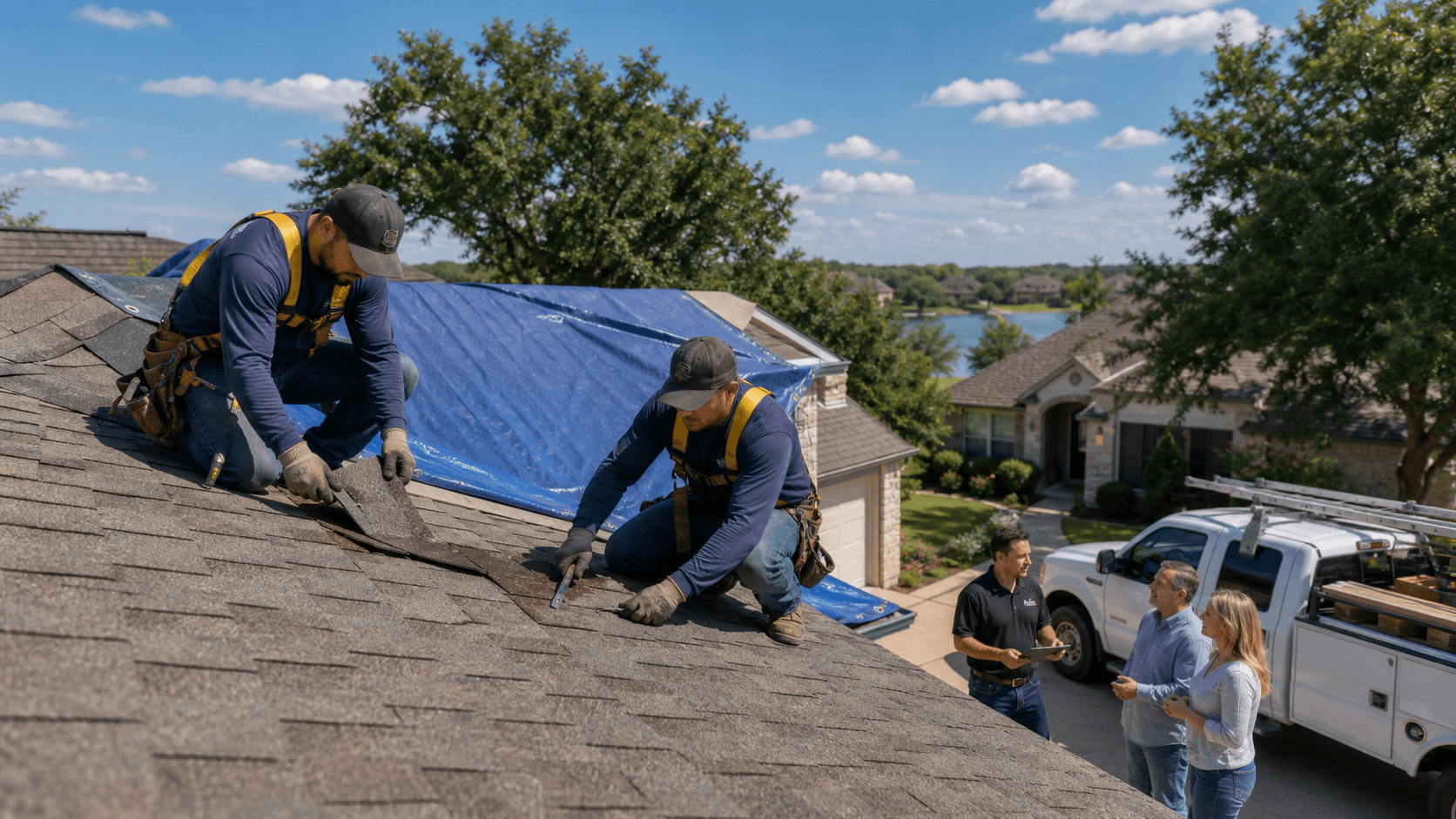
If there's active leaking, the first step is to stop the water. That can mean tarping a section of the roof or using temporary sealant around a broken vent or flashing. These are short-term fixes that protect your home while you work through the next steps, including any insurance claim.
A typical hail damage repair might include:
- Swapping out cracked or bruised shingles in certain areas
- Reworking and sealing flashing where water can sneak in
- Replacing split or dry-rotted pipe boots
- Rehanging or repairing dented or loose gutters
- Checking ventilation so the attic can breathe properly
Sometimes a roof has taken so many hits or is so aged that repairs aren't the best long-term answer. A full replacement can make sense when:
- Hail hits are spread across most of the roof, not just in small areas
- The shingles are brittle and won't seal well anymore
- The roof already has several patches and is near the end of its life
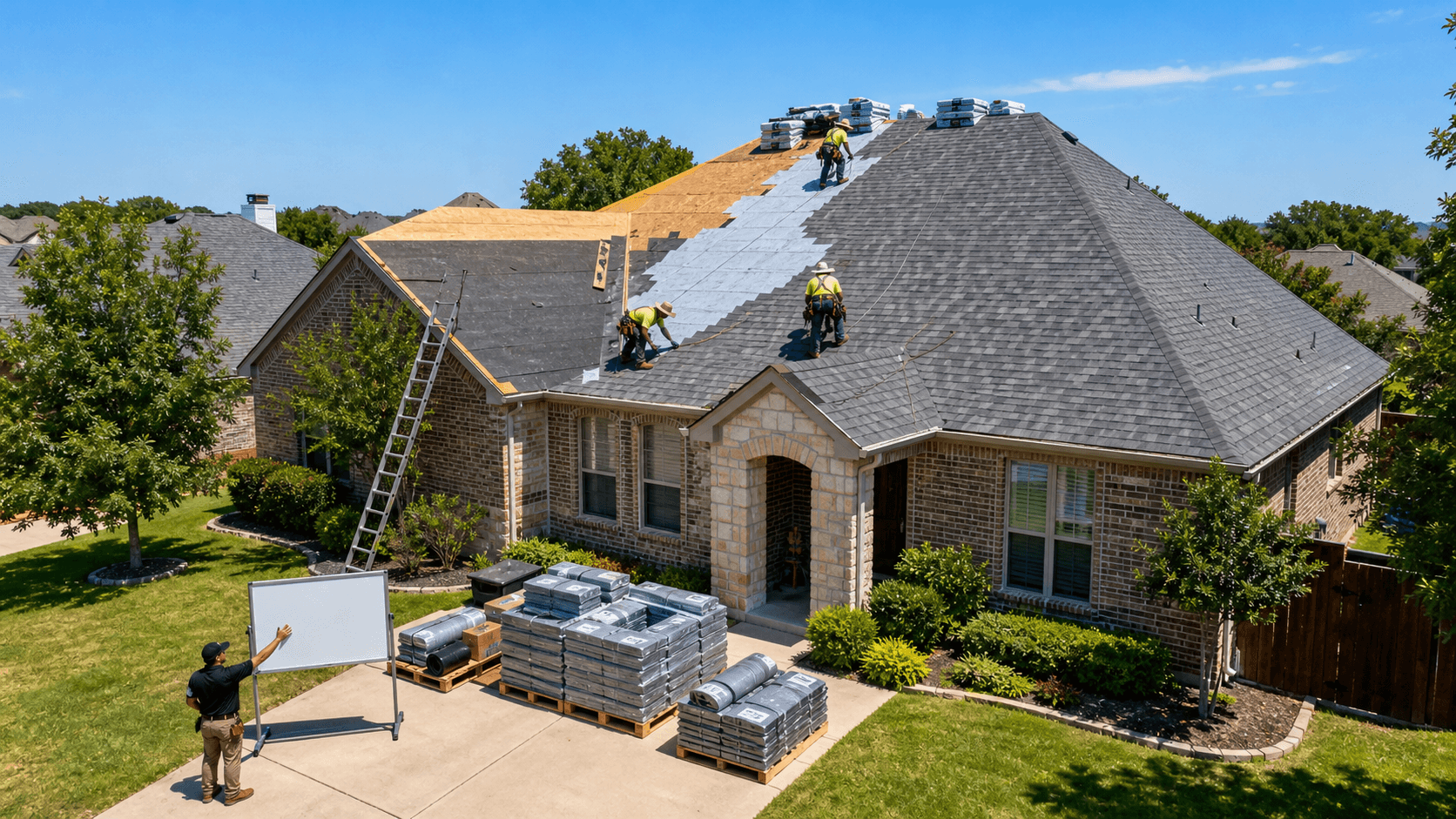
On the day of a replacement, here's what most Rockwall homeowners can expect. The crew shows up and protects your landscaping and driveways as much as possible. Old shingles come off, then we inspect the decking and swap any weak or rotten boards. New underlayment and shingles go on, followed by vents and flashing. Before we leave, we clean up debris and walk the project with you so you know what was done.
Handling Insurance Claims Without the Headache
Many roofs in Rockwall are covered by homeowner's insurance for hail damage, but the process can feel confusing. One smart move is to have a trusted local contractor look at your roof before you call your insurer. That way, you're not opening a claim for minor cosmetic marks that don't affect performance.
In general, your role is to:
- Contact your insurance company if real damage is found
- File the claim and get a claim number
- Keep track of any deadlines or forms they send you
A contractor can help with:
- A written inspection summary and photos
- A clear scope of work that shows what it takes to fix the damage
- Being present when the adjuster visits to point out damaged areas
It's important to have realistic expectations. You'll still have a deductible to pay. Your policy might cover either replacement cost or actual cash value, which changes how much the insurer pays based on the age of the roof. And you shouldn't expect a free upgrade to a totally different roof system if it's not needed to restore what you had.
Fall Storm Season in Rockwall and When to Call a Pro
As the weather cools off, Rockwall often sees more fronts and rain. That's when small hail bruises from earlier in the year can turn into real leaks. A roof that seemed fine in the summer sun may show its problems once steady rain returns.
There are a few simple things you can safely watch for from the ground:
- Missing or obviously lifted shingles
- Piles of black or gray granules around your downspouts
- Metal vents, gutters, or window screens that look pitted
- New brown spots or peeling paint on your ceilings or walls
It's time to bring in a professional in Rockwall if hail has hit your area, you see any of those warning signs, or your roof is already in that 10-to-15-year range. Catching problems in the fall lets you go into winter with a tight roof instead of dealing with slow leaks, mold, and drywall repairs later.
Hail storms are part of life here, but guessing at what happened on your roof doesn't have to be. With a clear inspection, honest feedback, and the right repair plan from Pex Point Services, you can move from worry to a roof you trust again. Reach out for a free estimate; you'll talk directly with the owner, not a call center.
Get Started With Your Project Today
If you are seeing leaks, missing shingles, or storm damage, now is the time to schedule professional roof repair in Rockwall, TX with Apex Point Services. We will inspect your roof, explain what we find in clear terms, and provide a straightforward plan to protect your home. Reach out today and let our team restore your roof's reliability and curb appeal, or contact us to request a prompt estimate.