Smart Flooring Choices for Open Dallas Homes
Open layout homes are everywhere in Dallas, from new builds to remodeled ranch houses. When rooms flow into each other with few walls, flooring quietly takes center stage. It ties the whole space together, or it breaks it up and makes things feel awkward.
Smart flooring installation is not just about picking a color you like. It means planning for how people move, how long the floor will last, how it handles heat and sunlight, and how it affects the value of your home. As a North Texas general contractor, we work with homeowners all the time who want their open spaces to look great before fall family visits and holiday entertaining, and flooring is usually the first place we start.
How Open Layouts Change Your Flooring Needs
In an open floor plan, your kitchen, dining room, and living room all share sightlines. You can stand in one spot and see almost everything. That means your flooring is always in view, from one end of the space to the other.
With fewer walls, flooring has to carry more of the design weight. Things like color, texture, and sheen matter a lot because they set the mood for the whole main level. A busy pattern or a harsh color shift between rooms can make the space feel choppy instead of open.
Open layouts also change how a home sounds and feels:
- Hard, echoing surfaces can make conversations louder
- Large open ceilings can bounce sound around
- The right underlayment can soften footsteps and reduce noise
Comfort underfoot matters too. In spaces where people stand for long stretches, like kitchen work triangles, flooring should feel supportive and not too hard on knees and backs.
Traffic patterns are different as well. In an open plan, everyone walks through the same main paths all day long. High-use spots like:
- The walkway from garage to kitchen
- The path from kitchen to living room seating
- Entries to patios or backyards
need tougher finishes, smart transitions, and a plan to handle dirt and grit that gets tracked in from outside.
Best Flooring Materials for Dallas Open Concepts
Several flooring options work well for open layouts in Dallas, each with its own strengths and tradeoffs. The right choice depends on how you live, who lives with you, and how your home handles heat and humidity.
Engineered hardwood
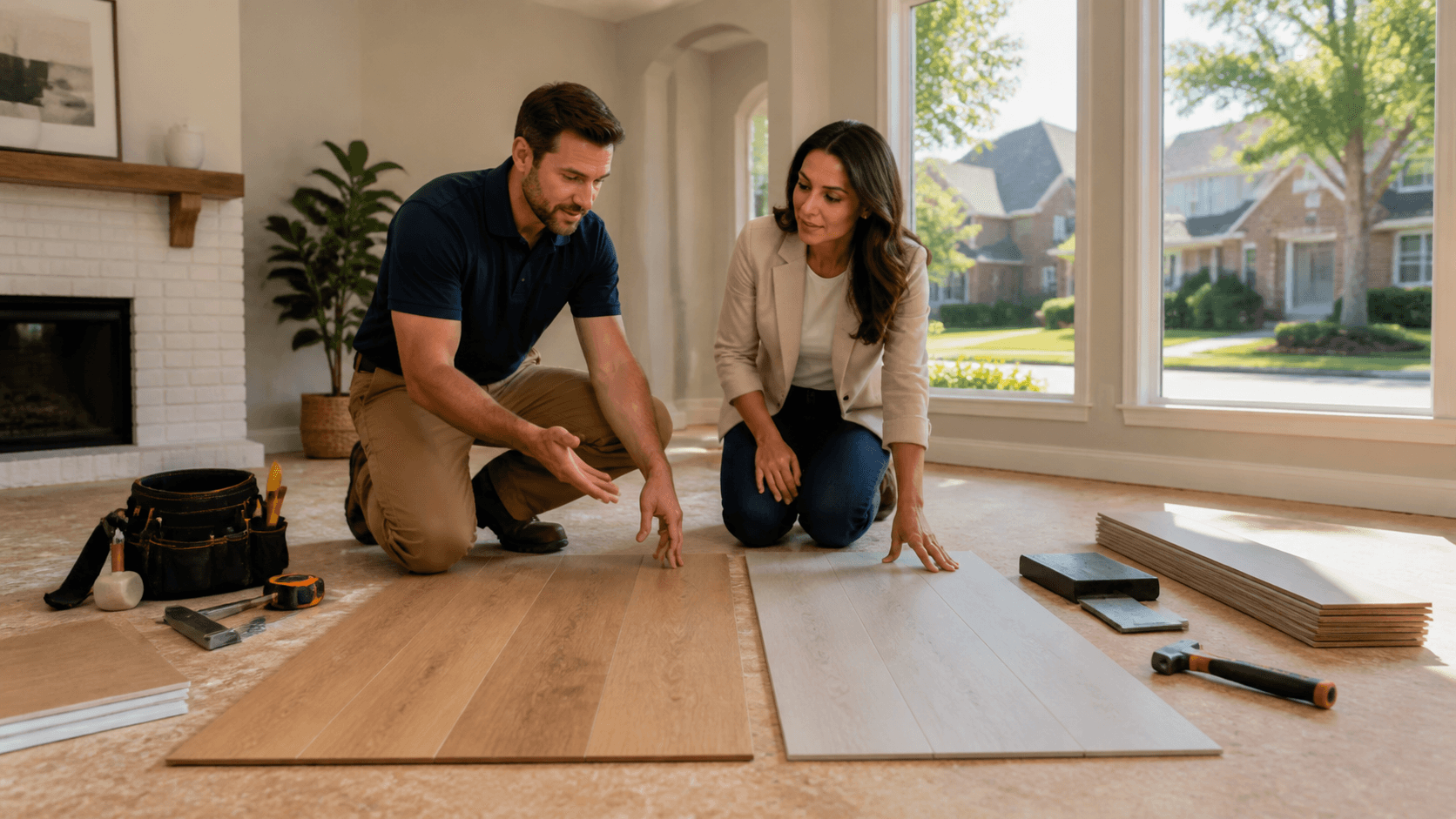
Many homeowners like the warm look of wood in a big, open space. Engineered hardwood can be more stable than solid wood in our climate since it is built in layers that help it handle moisture changes. It gives a classic look and can feel comfortable underfoot, especially with the right underlayment.
Luxury vinyl plank (LVP)
LVP is popular for busy homes, especially with kids and pets. It can handle spills, is usually scratch-resistant, and works well for indoor and outdoor flow near patio doors. In open layouts, it gives a wood look with strong durability and holds up well to heavy daily traffic.
Tile
Tile is strong and handles humidity and water very well, which makes it a good choice for kitchens and patio entries. In an open plan, large-format tile can make spaces feel wide and clean. It can feel harder and less forgiving, so many homeowners add area rugs in living spaces to soften things.
High-performance laminate
Modern laminate flooring can be a good balance between budget and style. It can look like wood without as much worry about fading from sunlight. Many products handle daily wear well, which is helpful in large family spaces.
Dallas homes deal with bright sun, long hot seasons, and bursts of humidity from storms. When choosing flooring, it helps to ask how each material reacts to:
- Direct sunlight through big windows
- Sudden moisture around doors during rain
- Constant use from kids, pets, and guests
Floors that resist fading, marking, and swelling will look better longer in open, sunny rooms.
Designing Seamless Flow From Room to Room
One of the easiest ways to make an open layout feel calm and high-end is to run the same flooring through most of the main level. A consistent surface from the front door through the living room and kitchen can make your home feel larger and more connected.
Still, you do not have to use one material everywhere. Thoughtful changes can help:
- Tile in kitchens and bathrooms for easy cleaning
- Softer flooring like carpet or different plank in bedrooms
- More durable material near exterior doors
The key is to keep visual flow. You can do this with:
- Similar color tones between different flooring types
- Matching trim and transition pieces
- Plank sizes or tile shapes that feel related in scale
Color choices matter too. Lighter floors can brighten big spaces, while medium tones often hide dust and pet hair well. Very dark floors can look dramatic but may show every speck in a wide open room.
Patterns and plank directions also play a big role. Running planks in the same direction across connected rooms can guide the eye and make spaces feel longer. At hallways and stairs, careful planning helps avoid awkward seams or narrow strips of flooring.
Smart Installation Strategies for North Texas Homes
Even the best flooring product will fall short without the right installation plan, especially in wide open areas. Large, continuous spaces put more pressure on subfloors and seams.
Professional flooring installation in Dallas, TX, starts with things you do not see:
- Moisture testing so your new floor will not lift or buckle
- Careful subfloor repairs and leveling
- Acclimating materials to your home before installation
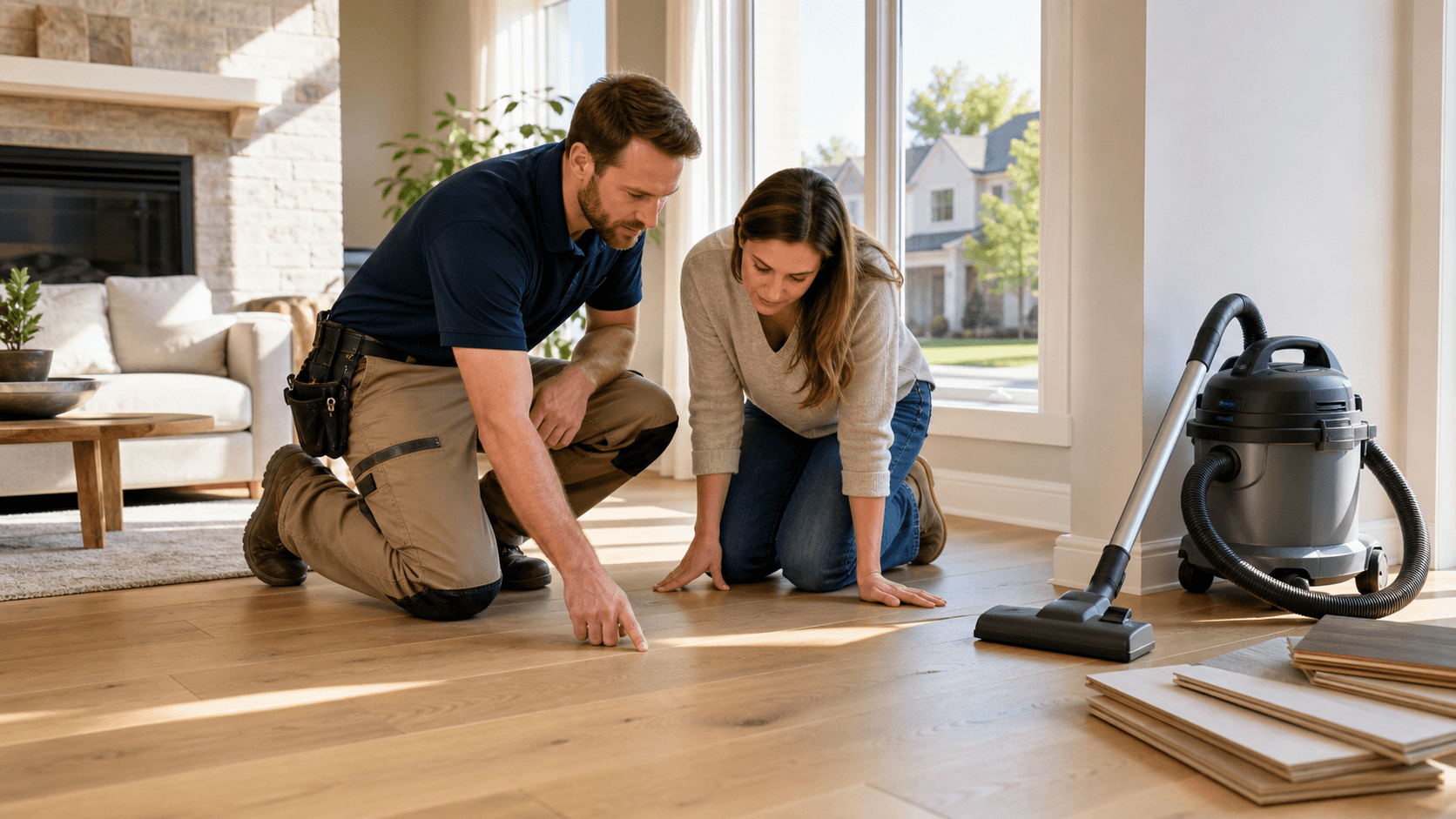
In big rooms, minor dips or humps in the subfloor become obvious fast. Leveling these areas helps planks lock tightly, keeps tile from cracking, and reduces squeaks. Expansion joints and proper gaps at walls give the floor room to move as temperatures and humidity shift.
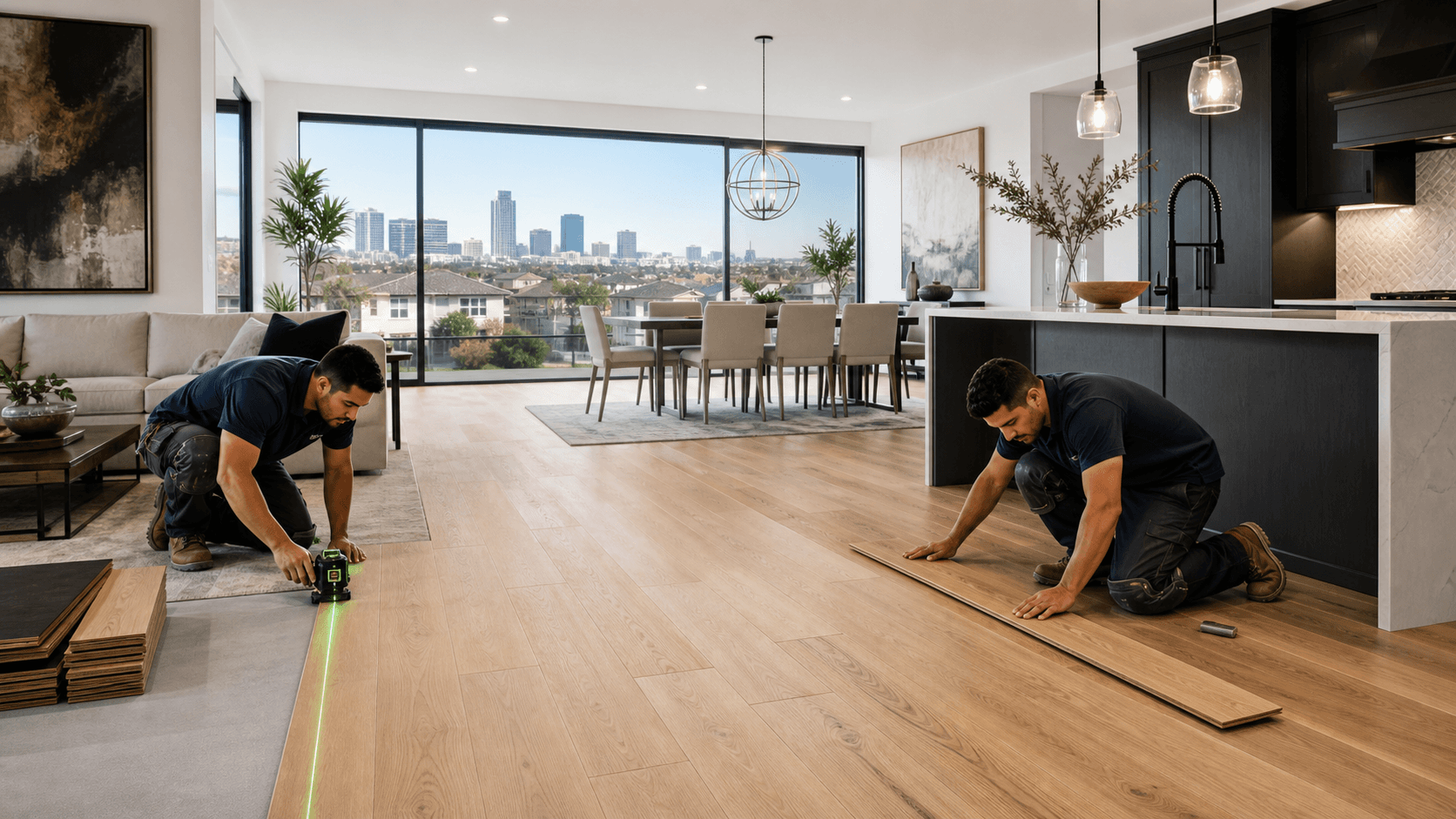
Layout choices matter, too. Aligning planks with main sightlines or natural light can make the floor look straighter and cleaner. Starting in key areas like entry points or long hallways helps keep the whole pattern aligned across multiple spaces.
Seasonal timing is worth thinking about. Many homeowners prefer to plan flooring projects in late summer and early fall, before holiday activities pick up and before schedules get too full. Planning ahead allows more time for choosing materials and preparing the home, instead of rushing at the last minute.
Budgeting, Maintenance, and Long-Term Value
Open-layout flooring covers a lot of square footage, so planning your budget takes some thought. Cost usually depends on:
- Material type and quality
- Installation details for large continuous rooms
- Any needed subfloor fixes or prep work
Choosing the right flooring up front can save a lot of frustration later. Floors that fit your lifestyle will need fewer repairs, less constant cleaning, and less frequent replacement, especially in homes where people are moving around all day.
Maintenance needs vary by material:
- Engineered hardwood may need gentle cleaners and felt pads under furniture
- LVP usually cleans up easily with basic products
- Tile grout may need sealing and periodic cleaning
- Laminate does best with limited standing water
Simple habits, like using entry mats, cleaning spills quickly, and following the product care guidelines, will keep open spaces looking ready for guests during fall gatherings and beyond.
For homeowners in Dallas with open layouts, smart flooring installation is about more than style. It is about flow, comfort, and daily life working together in one, wide, shared space. With the right materials and a carefully planned installation, your flooring can quietly support everything you do at home.
Get Started With Your Project Today
If you are ready to upgrade your home with expert craftsmanship and durable materials, our team at Apex Point Services is here to help. We will walk you through every step of the process, from selecting materials to the final walkthrough, so you always know what to expect. Explore our flooring installation in Dallas, TX to schedule your consultation and get a clear, detailed quote tailored to your space. Let us help you create a floor that looks great, performs well, and fits your budget.